Action movies to train a digital twin of a mouse brain
Researchers created an AI model of the mouse visual cortex that predicts neuronal responses to visual images
“It’s very hard to sample a realistic movie for mice, because nobody makes Hollywood movies for mice,” Tolias said. But action movies came close enough
A Stanford University Report:
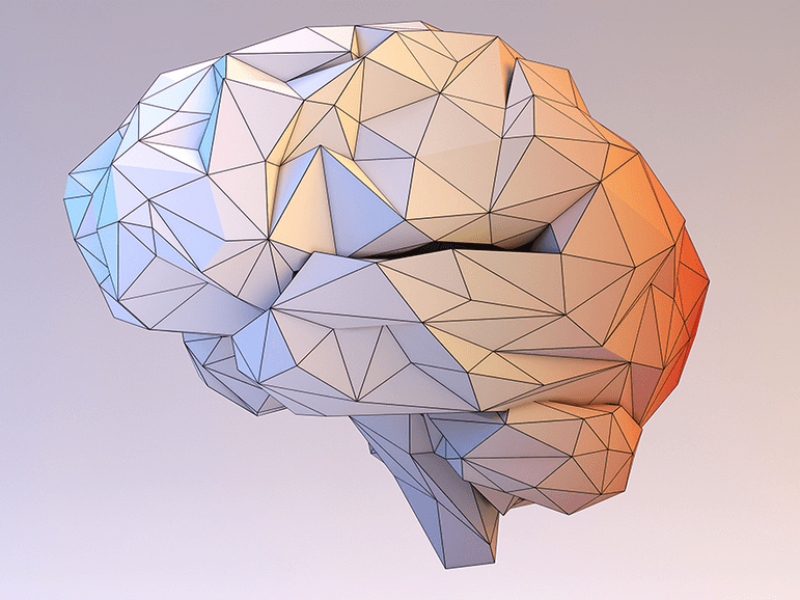
In a new study, Stanford Medicine researchers and collaborators used an artificial intelligence model to build a “digital twin” of the part of the mouse brain that processes visual information.
The digital twin was trained on large datasets of brain activity collected from the visual cortex of real mice as they watched movie clips. It could then predict the response of tens of thousands of neurons to new videos and images.
Digital twins could make studying the inner workings of the brain easier and more efficient.
“If you build a model of the brain and it’s very accurate, that means you can do a lot more experiments,” said Andreas Tolias, PhD, Stanford Medicine professor of ophthalmology and senior author of the study published April 9 in Nature. “The ones that are the most promising you can then test in the real brain.” The lead author of the study is Eric Wang, PhD, a medical student at Baylor College of Medicine.
To train the new AI model, the researchers first recorded the brain activity of real mice as they watched movies – made-for-people movies. The films ideally would approximate what the mice might see in natural settings.
“It’s very hard to sample a realistic movie for mice, because nobody makes Hollywood movies for mice,” Tolias said. But action movies came close enough.
Mice have low-resolution vision – similar to our peripheral vision – meaning they mainly see movement rather than details or color. “Mice like movement, which strongly activates their visual system, so we showed them movies that have a lot of action,” Tolias said.
Over many short viewing sessions, the researchers recorded more than 900 minutes of brain activity from eight mice watching clips of action-packed movies, such as Mad Max. Cameras monitored their eye movements and behavior.
The researchers used the aggregated data to train a core model, which could then be customized into a digital twin of any individual mouse with a bit of additional training … more information
 If you enjoyed this article, you will like the following ones: don't miss them by subscribing to :