Automotive chip reliability: a matter of design methods
The goal of the RESIST activities is designing particularly reliable high-performance components that at the same time contribute to one of the automotive industry’s overarching aims: Reducing fuel consumption and CO2 emission.
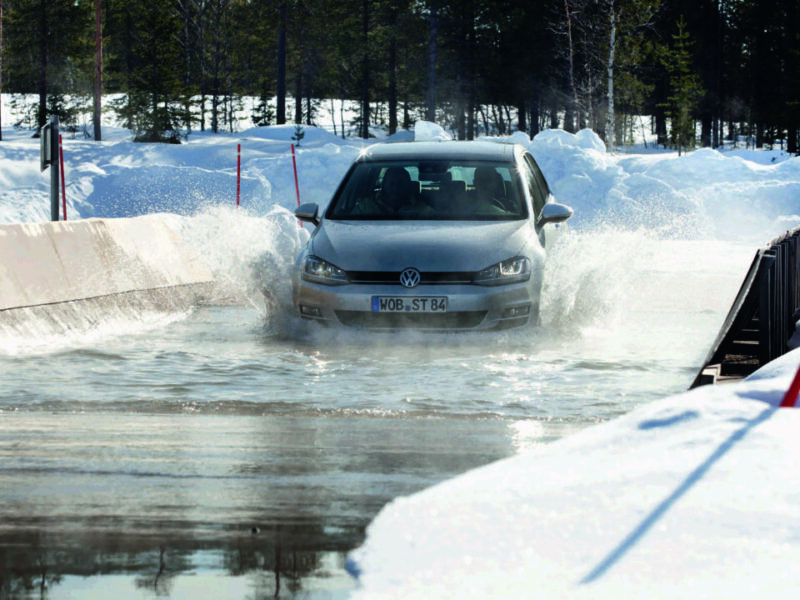
To meet customer expectations and legislative specifications, future vehicle generations and their electronic components will have to exhibit extremely high resilience and reliability; at the same time their physical dimensions need to be reduced to enable design engineers to implement more functions and new applications. This expectations translates into the requirement of higher performance at lower power consumption. Carmakers – and by the way, also aircraft designers – continue to drive the transition from micro- to nanoelectronics. Shrinking these components however increases their vulnerability to operating and environmental stress. Suitable design methods are required to ensure that components function reliably even at extreme temperatures, for example.
For these reasons, the RESIST partners will research how such high-performance microelectronic and nanoelectronics components can be designed to achieve maximum robustness and reliability. The Design Automation division of the Fraunhofer Institute for Integrated Circuits (Fraunhofer IIS) is coordinating the research activities for new methods, chip designs, and systems. Members of the research team are chipmakers Infineon and NXP as well as Bosch, Volkswagen and chip design company Muneda GmbH. From the academic and research community, the University of Applied Sciences Reutlingen (where Bosch’s MEMS fab is located, the Munich Technical University and the university of Bremen are participating. And since the results of this projects are likewise relevant for the aviation industry, also the Airbus Goup Innovation research networks is involved.
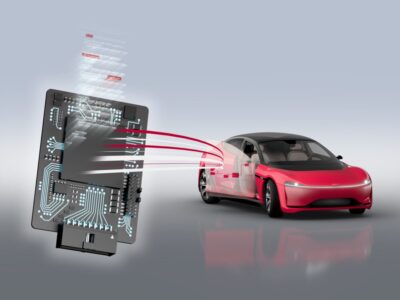
To significantly increase the operational lifetime of electronic systems in vehicles and aircraft, the RESIST group will develop methods that enable engineers to predict the behaviour of chips and systems already in the design phase. These predictions are spanning the entire planned period of use then can be taken into account during the system design. This requires new development approaches for electronics as well as additional circuit components. These advances will ensure that components can better tolerate operating stress conditions over their entire life. An “early warning system” is also being developed that will report any electronic degradation to the vehicle driver or maintenance service. For this purpose, the project partners are developing aging monitors that constantly monitor the current condition of safety-related components. These methods will open up new application possibilities for cars, enabling design engineers to replace more mechanical parts through electronic systems. In addition, the project will make systems possible that adapt to external conditions through specific control mechanisms, increasing energy efficiency and safety.
These German RESIST activities are part of a European project of the same name which in turn is part of the pan-European CATRENE project. At the European level, the research work is coordinated by NXP.
 If you enjoyed this article, you will like the following ones: don't miss them by subscribing to :