’Breathing’ batteries that don’t require rare metals
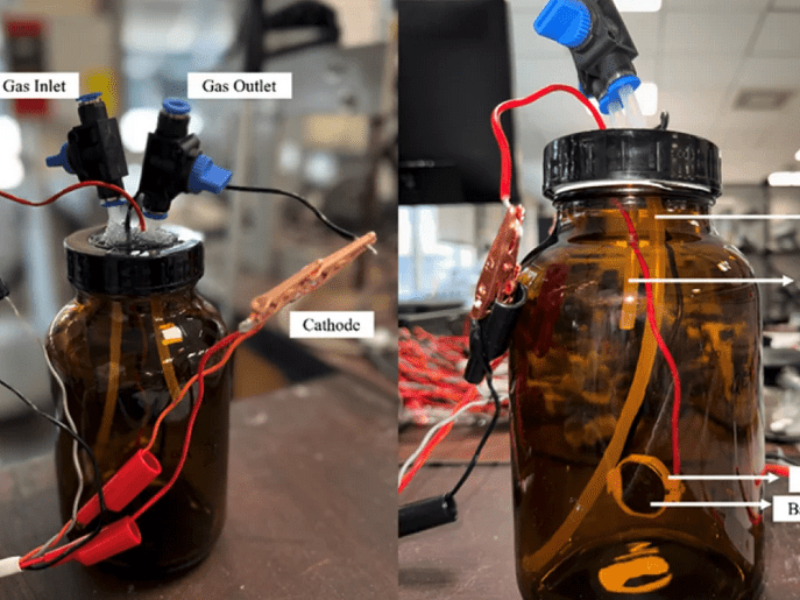
Using a low cost catalyst called caesium phosphomolybdate (CPM) helped the researchers from the University of Surrey to overcome the usual problems with Lithium-CO2 batteries
Lithium–CO₂ ‘breathing’ batteries release power while capturing carbon dioxide, offering a greener alternative that may one day outperform today’s lithium-ion batteries. Until now, Lithium-CO₂ batteries have faced setbacks in efficiency – wearing out quickly, failing to recharge and relying on expensive rare materials such as platinum. However, researchers from Surrey have found a way to overcome these issues by using a low-cost catalyst called caesium phosphomolybdate (CPM). Using computer modelling and lab experiments, tests showed this simple change allowed the battery to store significantly more energy, charge with far less power and run for over 100 cycles.
The study, published in Advanced Science, marks a promising step toward real-world applications. If commercialised, these batteries could help cut emissions from vehicles and industrial sources – and scientists even imagine they could operate on Mars, where the atmosphere is 95% CO₂.
Source: The University of Surrey
 If you enjoyed this article, you will like the following ones: don't miss them by subscribing to :