CANape Kernel targets scalable data acquisition beyond the desktop
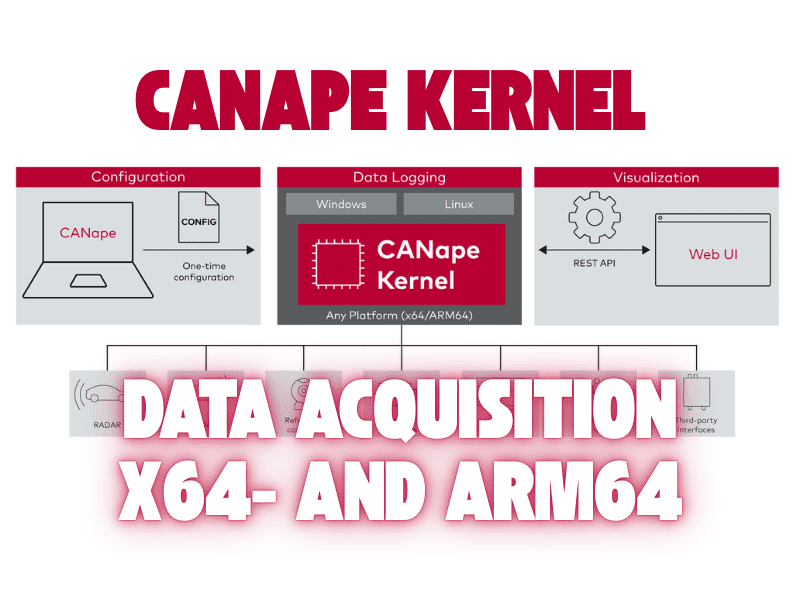
Vector has introduced CANape Kernel, a compact measurement core designed to bring CANape-based data acquisition onto x64- and ARM64 platforms running Windows or Linux. The software is positioned as a standalone logging engine that can operate independently of the full CANape desktop environment, particularly in automated or embedded measurement setups.
For eeNews Europe readers working on automotive electronics, ADAS development, or software-defined vehicle (SDV) validation, the announcement is relevant because it points to a shift towards more distributed, platform-agnostic data acquisition architectures that can be deployed closer to the test environment.
From CANape tool to embedded measurement core
CANape Kernel is derived from Vector’s established CANape measurement and calibration tool, but restructured as a lean console application. Measurement configurations are prepared once within CANape and then transferred to the target system, where the kernel handles device initialisation and continuous data acquisition. This separation potentially allows engineering teams to reuse existing workflows while deploying logging functions on industrial PCs or single-board computers.
According to Vector, the software supports both Windows and Linux environments and runs on x64 and ARM64 architectures. This hardware flexibility may be relevant for projects that combine traditional automotive test benches with edge computing platforms or in-vehicle data loggers.
Protocol and sensor coverage for complex systems
The CANape Kernel measurement core is intended to cover a wide range of automotive communication and sensor interfaces. Supported protocols include CAN, CAN FD, LIN, FlexRay, Ethernet and XCP, alongside integration options for ADAS-related sensors such as radar, lidar and video streams. This breadth reflects the growing complexity of vehicle networks and the need to synchronise data across multiple domains during validation and testing.
Vector describes the kernel as having low resource requirements and fast start-up times, which could be relevant for automated test sequences or scenarios where logging is triggered dynamically rather than running continuously.
Integration via REST API and mobile interface
Control and integration are handled primarily through a REST API, enabling the CANape Kernel to be embedded into existing automation frameworks or test orchestration systems. As an alternative, Vector offers the CANape Mobile UI, which provides a browser-based interface for control, visualisation, triggering and annotation, including basic video preview functions.
 If you enjoyed this article, you will like the following ones: don't miss them by subscribing to :