Compact quantum sensing technology promises GPS-free navigation
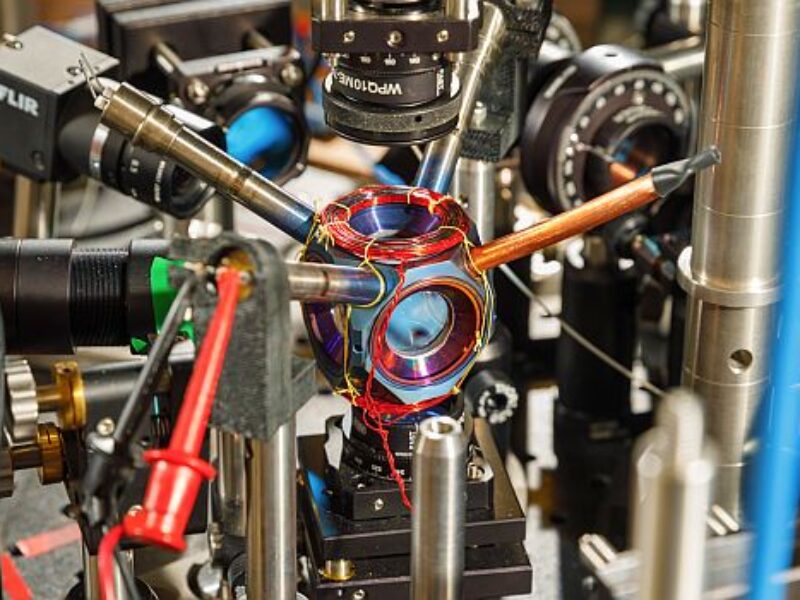
Developed as a core technology for future navigation systems that don’t rely on GPS satellites, the device comprises an avocado-sized titanium vacuum chamber containing a cloud of atoms at the right conditions for precise navigational measurements. It is the first such device, say the scientists, that is small, energy efficient, and reliable enough to potentially move quantum sensors – sensors that use quantum mechanics to outperform conventional technologies – from the lab into commercial use.
Countless devices around the world use GPS for wayfinding using atomic clocks – known for extremely accurate timekeeping – to hold the network of satellites perfectly in sync. But GPS signals can be jammed or spoofed, potentially disabling navigation systems on commercial and military vehicles alike.
So instead of relying on satellites, say the researchers, future vehicles might keep track of their own position. They could do that with on-board devices as accurate as atomic clocks, but that measure acceleration and rotation by shining lasers into small clouds of rubidium gas like the one the Sandia scientists created has contained.
While atomic accelerometers and gyroscopes already exist, they’re too bulky and power-hungry to use in an airplane’s navigation system as they need a large vacuum system to work – one that needs thousands of volts of electricity.
“Quantum sensors are a growing field, and there are lots of applications you can demonstrate in the lab,” says Sandia postdoctoral scientist Bethany Little, who is contributing to the research. “But when you move it into the real world there are lots of problems you have to solve. Two are making the sensor compact and rugged. The physics takes place all in a cubic centimeter (0.06 cubic inches) of volume, so anything larger than that is wasted space.”
The scientists say they have shown that quantum sensing can work without a high-powered vacuum system. This shrinks the package to a practical size without sacrificing reliability.
Instead of a powered vacuum pump, which whisks away molecules that leak in and wreck measurements, a pair of devices – called getters – uses chemical reactions to bind intruders. The getters are each about the size of a pencil eraser so they can be tucked inside two narrow tubes sticking out of the titanium package. They also work without a power source.
To further keep out contaminants, the researchers partnered with Sandia materials scientists to build the chamber out of titanium and sapphire. These materials are especially good at blocking out gases like helium, which can squeeze through stainless steel and Pyrex glass.
Construction took sophisticated fabrication techniques that Sandia has honed to bond advanced materials for nuclear weapons components. And like a nuclear weapon, the titanium chamber must work reliably for years.
The researchers say they are continuing to monitor the device, with a goal to keep it sealed and operational for five years – an important milestone toward showing the technology is ready to be fielded. In the meantime, they’re exploring ways to streamline manufacturing.
For more, see “A passively pumped vacuum package sustaining cold atoms for more than 200 days featured.”
Related articles:
DoD seeks quantum space sensor for precision inertial measurement
Precision navigation partnership looks to quantum sensing
Unique physics effect promises enhanced quantum sensors
Quantum sensor detects comm signals over entire RF spectrum
Next-generation inertial sensors aim to replace GPS
 If you enjoyed this article, you will like the following ones: don't miss them by subscribing to :