Customer engagement puts the Digital Consumer in the driver’s seat
Digital Consumer is armed with many brand and product choices. While various industries have adapted their customer engagement strategies to engage the Digital Consumer, the automotive customer journey remains a path of multiple years, players, and disjointed interactions. But, in fact, the vehicle just might be the most important digital consumer domain.
The Digital Consumer is armed with many brand and product choices, infinite pieces of data, social recommendations or words of caution—all of which are delivered via various devices, interfaces, and "experiences", including the vehicle itself. While various industries have adapted their customer engagement strategies to address the reality of engaging the Digital Consumer, the automotive customer journey remains a path of multiple years, players, and disjointed interactions—all creating obstacles to vehicle sales and service loyalty.
Impact of Great Recession and the Digital Consumer on the U.S. auto industry
The post-recessionary U.S. automotive sector has witnessed a loss of nearly 6 million annual sales in the space of three years. This has resulted in unprecedented and unsettling changes in the automotive world.
Historic brands have disappeared or changed ownership. Dealer showrooms by the thousands have shut their doors. New clean energy start-ups like Tesla, Fisker, and Coda Automotive—along with existing players like Nissan, GM, and Toyota—are creating viable new green products.
These tremors in the U.S. automotive industry have been mirrored by the emergence of the Digital Consumer. The unrelenting rise of the Internet is transforming consumers from passive information gatherers to engaged, interactive, and self-directed participants with brands, brand enthusiasts, and detractors. Digital Consumers are tapping into increased, personalized, online "social" conversations and making more informed purchase decisions.
Consumers armed with digital devices, applications and data demand unfettered access to critical, customizable and sharable information (e.g. there are an estimated 142 million Facebook users in the U.S. alone). This means consumers are pushed towards (or away from) automotive transactions by real-time recommendations from social network "friends." This influence can be felt at consumers’ homes while sitting on their laptops; at the neighborhood coffee shop while scanning their iPads; on the dealer’s lot, while awaiting their final purchase paperwork in the dealer’s office; or long after leaving the dealership while commuting in their shiny new Internet-enabled rides.
In fact, the vehicle just might be the most important digital consumer domain. According to leading automotive analysts like Gartner’s Thilo Koslowski, the automotive industry now must also address connected-vehicle centric communication channels and increased customer expectations for expedited support and problem resolution. For example, customers increasingly expect that automakers have instant access to any vehicle-related diagnostic information in order to address any problem in a timely manner.
The bottom line is that the "push model" of products, communications, and interactions through traditional media, distribution and communications channels targeted at the consumer no longer resonates.
The move from "self-centered" to "customer-centric" engagement
Across industries, brands have tried to adopt measures to cope with the rapid changes in consumer behavior and enabling technologies. The brands that have been successful have built better relationships with consumers through investment in customer–centric practices and corporate cultures. For example:
- Harley Davidson uses customer interactions to gain valuable feedback to strengthen their brand, their products, and loyalty of their customers. They survey them, talk to them, ride with them, and, most importantly, create many memorable experiences for them.
- Starbucks focuses its marketing efforts on giving texture to the brand with fun, engaging formats. With Starbucks Mobile App, customers can transform their iPhone into their Starbucks card and can check their balance, enjoy rewards, and two hours of free Wi-Fi per day etc.
- Zappos treats every opportunity and every customer touch-point to make the customer think "Wow, that was the best service I’ve ever had." Small but important practices like featuring a toll-free 800 number on top of every web page allow customers to engage better and get a great customer experience.
The hallmark of the success of these brands is their ability to segment customers, accommodate varied customer behaviors and preferences, and align their brand promises throughout their customer interactions. For the U.S. automotive sector, the lessons of "customer-centric" engagement in the era of the Digital Consumer are highly instructive and the path to customer-centricity starts along the "automotive customer lifecycle."
What is the automotive customer lifecycle
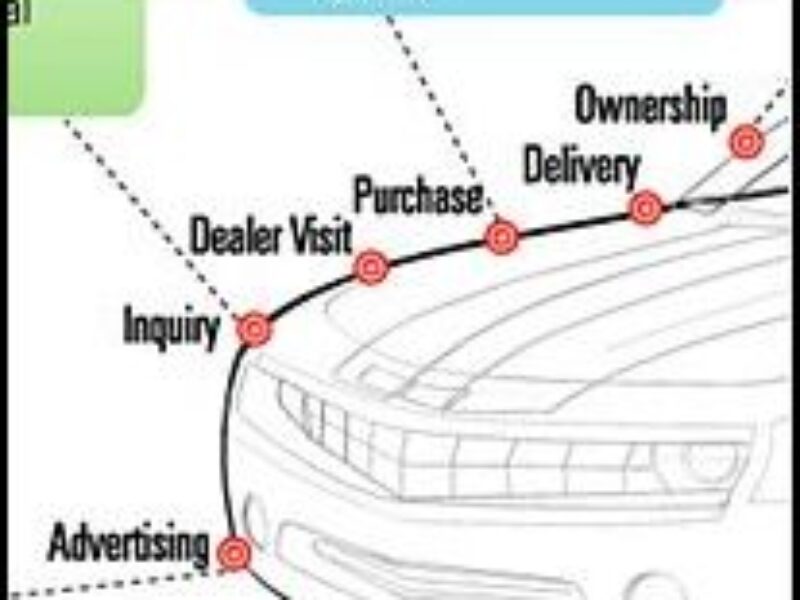
For decades, the automotive purchase "funnel" has been the exclusive icon of choice for describing the perceptual and behavioral changes consumers experience in shopping for a car. This funnel fails to address the complexity of the series of prospect and owner interactions that occur before and after a vehicle purchase.
For the complete article which discusses the difference of the consumer experience in the automotive world and in the consumer electronics world, the reasons for these differences, its consequences and strategies to overcome them, please click here.
Article by courtesy of EE Times Design.
 If you enjoyed this article, you will like the following ones: don't miss them by subscribing to :