DARPA selects teams to develop airborne power beaming relays
US research agency DARPA has selected three teams to design wireless optical power relays to deliver energy to aircraft in flight.
The first phase of the Persistent Optical Wireless Energy Relay (POWER) programme at DARPA will see the three teams, led by RTX Corporation, Draper, and BEAM , design and develop the power beaming relays. The programme aims to demonstrate the key components necessary for a resilient airborne energy network.
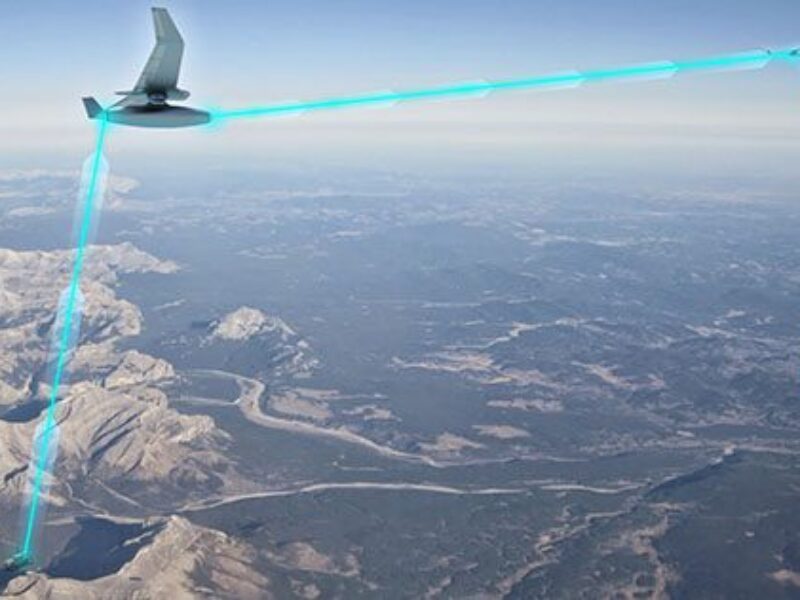
The ultimate aim is to show an airborne optical pathway that delivers 10kW of optical energy to a ground receiver that is 200 kilometers away from the ground source laser.
“This project has the potential to advance power beaming by orders of magnitude, which could radically reshape society’s relationship with energy,” said Dr Paul Jaffe, who leads the POWER program at DARPA. “A wireless energy web could unlock power from new and diverse sources, including from space, and rapidly and reliably connect them to energy-starved consumers.”
- Energous moves to second phase of consumer wireless
- Powercast, Powermat partner on short/long range wireless power
The airborne power relay technology designed in phase one will be demonstrated in pods carried by existing aircraft in the project’s second phase.
Power beaming will enable smaller, less expensive future aircraft since fuel storage and engine volume could be dramatically reduced. This will be explored through conceptual designs in phase one.
Eventually these new, small, distributed platforms could provide cost-effective aircraft with unlimited range and endurance. Each relay design will be evaluated based on accurate and efficient energy redirection, wavefront correction for high beam quality, and throttleable energy harvesting.
In the third and final phase of the program, the relays will be demonstrated through the 200km airborne optical pathway
These power beaming relays will overcome the unacceptable conversion losses that occur when changing from propagating waves to electricity repeatedly in a multiple-hop network. Relays also enable high-altitude transmission, which is vastly more efficient than beaming power through the thick, turbulent, lower atmosphere. This high-altitude optical layer will provide the long-range, high throughput backbone for the wireless energy web.
“Each of the selected teams proposed unique technical approaches to the power beaming relay problem, ranging from novel combinations of existing technologies to high-risk, high-reward technological innovations,” said Jaffe. “The range of proposed solutions encompasses a balance of assured performance and potential breakthroughs in size, weight, and power to enable small distributed systems for the future wireless energy web.”
The first phase will include benchtop demonstrations of critical technologies and is expected to last 20 months with potential for a three-month option of additional risk reduction efforts. The second phase will involve an open solicitation in early 2025 and will focus on integration of the relay technologies onto an existing platform for a low-power, airborne demonstration.
 If you enjoyed this article, you will like the following ones: don't miss them by subscribing to :