Improving energy storage and desalination technologies
Renewable energy storage and desalination to produce potable water are very different environmental issues, but Assistant Professor Ankur Gupta’s research involves a technical commonality: porous electrodes to maximize performance
Technologies using porous electrodes include supercapacitors – energy devices that only require a few seconds to charge and have a longer life expectancy, as compared to laptop batteries, which degrade and become unusable in two to three years. The technologies also include deionizers, which remove salt from ocean water by applying electricity. Deionizers and supercapacitors are similar in that ions are attracted to the electrode’s complex network of pores when voltage is applied.
Designing porous materials to maximize performance in both devices is complex, Gupta said. Researchers first need to understand how multiple ionic species move through the electrodes’ pore networks, containing millions of pores of different sizes and shapes. Preliminary results from applied mathematics techniques combined with computing are encouraging, he added, demonstrating it’s possible to explain what happens when ions travel through the pores.
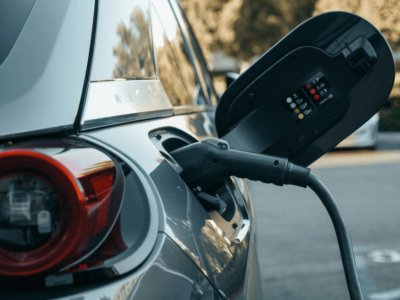
Gupta explains that high-performance supercapacitors can be important for some energy storage needs, but not for others. An electric bus making frequent stops could allow a supercapacitor to recharge each time the bus stops. However, supercapacitors would only allow an electric car to travel a few miles, so they would not be useful in that situation.
Based on the fundamental work on electrolyte transport developed by his group, Gupta envisions a time when manufacturers will be able to customize 3D printing of supercapacitors for items as varied as small coffee machines and large electric buses.
The NSF funding will allow five years of support for a PhD student. Gupta also plans to create a Massive Open Online Course (MOOC) to train engineers in how they can contribute to renewable energies and sustainable devices. He also plans to create open-source web-based interactive simulations and to offer STEM workshops for young students through CU Boulder’s Pre-Collegiate Development Program, which targets first-generation college students in Adams County.
“No single person can solve everything,” Gupta said. “As a chemical engineer I feel I can contribute to these devices and help create a more sustainable future.”
 If you enjoyed this article, you will like the following ones: don't miss them by subscribing to :