Infineon backs electric road charging with SiC modules
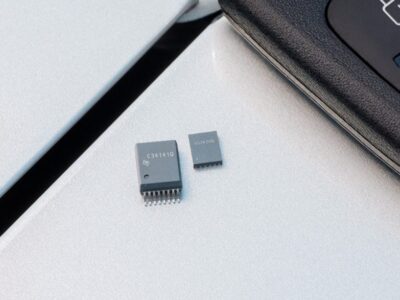
Infineon Technologies is partnering with Electreon to push electric road charging for commercial vehicles from pilot tracks towards highway deployments. The company will supply customized silicon carbide power modules for Electreon’s dynamic wireless electric road system, which is designed to deliver electric road charging to buses and trucks while they are in motion. The collaboration targets higher power levels and more compact vehicle battery packs for fleets operating on busy routes.
For eeNews Europe readers, this development is relevant because dynamic electric road charging could reshape power-electronics requirements for traction inverters, on-board chargers and grid-side converters in future European infrastructure and heavy-duty EV platforms. It also points to potential opportunities around system integration, standards and grid planning as trials scale up beyond test tracks.
Dynamic wireless charging on France’s A10 and beyond
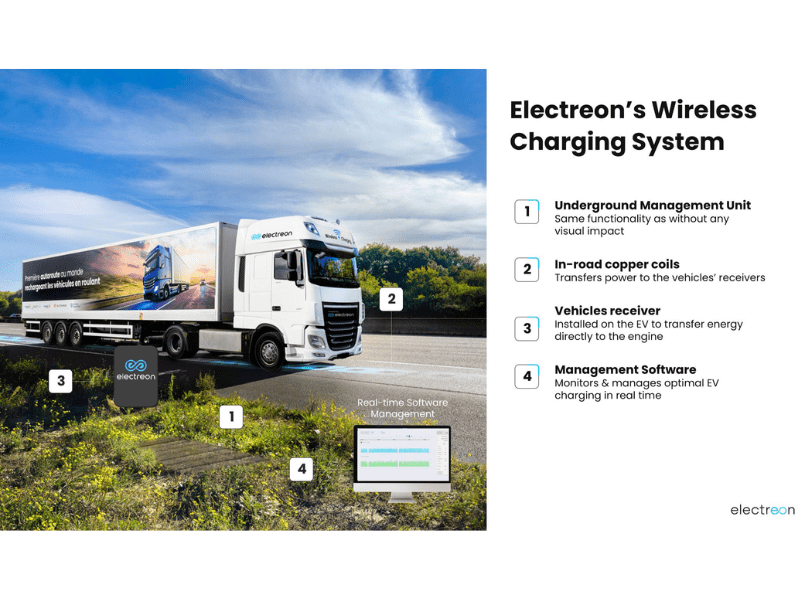
Electreon’s wireless electric road system uses copper coils embedded under the road surface to transfer power inductively to buses, trucks and other EVs as they pass over dedicated sections. The coils are connected to the grid and only energize when a compatible vehicle is detected above them, limiting unnecessary losses and helping operators coordinate with local distribution networks.
In the Infineon collaboration, EasyPACK 3B CoolSiC 2000 V modules, tailored for Electreon, are used to convert grid power for the in-road infrastructure. According to the companies, the setup achieves an average power transfer of around 200 kW, with peaks above 300 kW on suitably equipped road sections. A recent milestone on France’s A10 highway, described as the first highway segment to wirelessly charge heavy- and medium-duty trucks, buses, vans and passenger cars in motion, is being used as a reference for further projects.
Electreon has already implemented the Infineon-based hardware on a range of test tracks in the U.S., Germany, France, Norway, Portugal, Sweden, Italy, Israel and Japan, with additional longer-distance deployments under discussion. For infrastructure planners and power designers, these pilots potentially offer real-world data on efficiency, thermal performance and the impact on battery-sizing strategies.
SiC power modules target smaller batteries and continuous operation
One of the design goals behind the project is to allow EVs, especially buses and trucks, to operate for longer periods using smaller battery packs by topping up charge while on route rather than relying solely on depot or roadside fast chargers. This could potentially reduce vehicle weight and upfront battery costs, while freeing payload capacity for commercial operators.
In the press announcement, Dominik Bilo, Executive Vice President and Chief Sales Officer Industrial & Infrastructure at Infineon Technologies, said: “Electreon’s wireless charging system is a real game changer on the road to reducing carbon emissions in transportation. We’re proud to contribute to this groundbreaking innovation with our customized SiC power modules, which efficiently convert electrical energy to charge vehicles on the go, tailored to meet Electreon’s specific needs. The solution fits perfectly with our goal to contribute to a climate-neutral future, further driving decarbonization and digitalization.”
From Electreon’s side, CEO Oren Ezer highlighted the potential of combining electric road charging with SiC-based electronics: “Wireless EV charging is already happening today, and Electreon is at the forefront of this transformation. We’re using Infineon’s advanced silicon carbide technology to make in-road charging even more powerful and efficient, allowing electric buses and trucks to operate continuously without relying on traditional charging stations. This breakthrough reduces operational costs, lowers emissions and expedites EV adoption on a global scale. The world is embracing wireless charging, and we are proud to lead the way.”
 If you enjoyed this article, you will like the following ones: don't miss them by subscribing to :