Intel 18A anchors Intel’s Panther Lake and Xeon 6+ platforms
 Cette publication existe aussi en Français
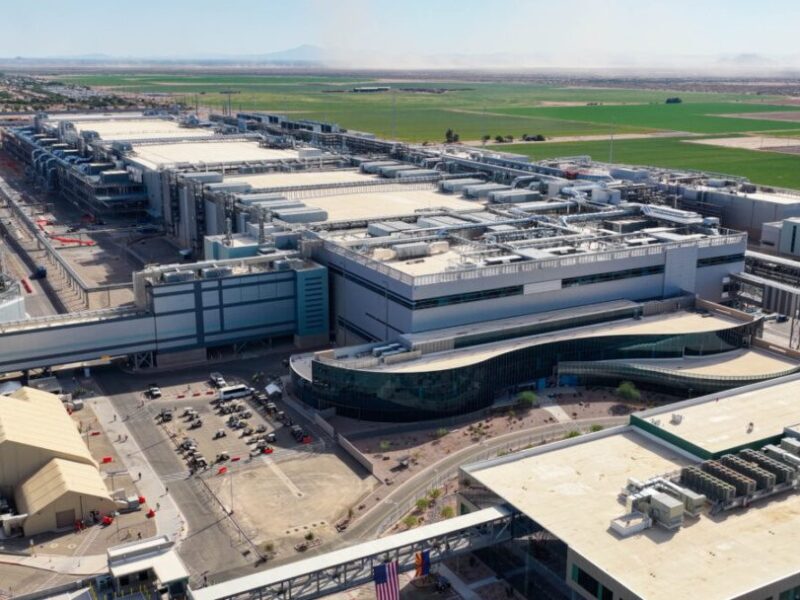
Intel used its annual Technology Tour in Arizona to outline how its Intel 18A process node will support both next-generation client and server products. The event offered a first look at the company’s Fab 52 manufacturing facility in Chandler, Arizona. There, the first processors based on Intel 18A are being produced.
This development is of direct interest to eeNews Europe readers involved in PC, embedded, or cloud infrastructure design, as it signals the timing of Intel’s manufacturing transition and its implications for AI-capable compute platforms.
Fab 52 and the Intel 18A roadmap
Fab 52 is Intel’s fifth high-volume factory at its Ocotillo campus, part of a $100 billion investment to expand U.S. semiconductor production capacity. It will manufacture logic chips using Intel 18A, a process node that combines RibbonFET transistors with PowerVia backside power delivery to potentially enhance performance-per-watt and density.
The first products on the node include the Intel Core Ultra series 3 processors (code-named Panther Lake) and the Intel Xeon 6+ (Clearwater Forest) data-center CPUs. Both were shown publicly for the first time during the Tech Tour. Panther Lake, described by Intel as its first AI PC platform on 18A, will underpin the company’s next client computing generation, while Clearwater Forest represents Intel’s most efficient E-core server design to date.
Aligning architecture and manufacturing
Intel’s senior vice president Jim Johnson, who leads the Client Computing Group, highlighted Panther Lake’s architectural improvements over prior Core Ultra designs. He emphasized power efficiency and AI-accelerator integration. Kevork Kechichian, executive vice president and general manager of Intel’s Data Center Group, presented the Xeon 6+ wafer. He described it as “the most efficient server processor the company has ever created.”
Intel CEO Lip-Bu Tan also toured the Chandler facility in early October, noting the importance of 18A as the node that unifies Intel’s architectural and foundry advances. With 18A ramping in Arizona, Intel aims to bring high-volume AI-capable PC and server silicon to market starting in 2026.
 If you enjoyed this article, you will like the following ones: don't miss them by subscribing to :