
Lithium batteries last longer than expected in applications
 Cette publication existe aussi en Français
A recent study is showing that lithium batteries are lasting significantly longer than expected.
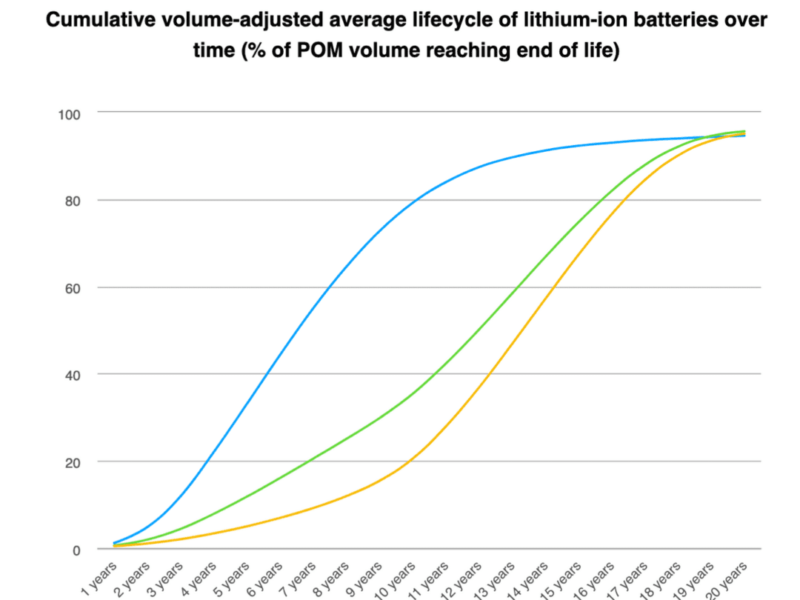
Of the lithium-ion batteries that were placed on the market in 2010 close to 80% had reached end of life in 2020, available either for reuse or recycling. However of the batteries that were placed on the market in 2020 only 35.4% will have reached end of life after ten years.
One of the main reasons is that more batteries are placed in applications where they last much longer than before. They last longer because they are used in packs that are better designed to keep the battery healthy longer.
This is also because the equipment they power is kept in use longer. Few people use a mobile phone that is over 10 years old but for cars the average age in EU is over 12 years, meaning most cars are driven for more than 20 years.
The data comes from the latest update on CES Online that follows the estimated lifecycle of batteries in 30 different applications from mobile phones to electric vehicles (EVs). “In 2040 we expect less than 21% of the batteries placed on the market 10 years prior, to have reached end of life,” says the study.
Between 2010 and 2020 there were improvements in both longevity and energy density of lithium-ion batteries, particularly for energy density and specific energy. Although density in itself doesn’t have an impact on a battery’s cycle life it does raise the level from where degradation starts and thereby enables longer use of a product.
However the main reason lies in the actual mix of applications using lithium-ion batteries. In 2010 over 98% of the batteries placed on the market were used in portable applications. They were part of smaller packs in products with a higher turnover rate among users such as mobile phones, laptops and cameras.
In 2020 portable batteries were less than 20% while light and heavy EVs came in at 62%.
There is also a behavioural and economic driver. While $2500 for an 13 years old Nissan Leaf or Mitsubishi i-Miev is not a lot for a car it still a substantial sum of money. As long as it passes the annual check and fulfil basic requirements it will stay in use.
The same is true for mobile phones but even if there is a market for the 10 year old iPhone 6, the amounts are so small that a larger share of the devices finds its way to the e-waste stream than what the case for cars.
Circular Energy Storage Research and Consulting has collected lifecycle data for more than 7 years, ranging from the scrap rate of individual models, annual mileage of EVs, domestic and international trade of EVs as well as sales of used EVs in developing markets.
This provides forecasts of when batteries will be available for reuse or recycling and to estimate the size of those markets. This can also be used for car and battery makers as well as governments who wants to understand how much batteries that remain in the market and how big EV fleets actually are
 If you enjoyed this article, you will like the following ones: don't miss them by subscribing to :