Multi-modal transistor pitched as display TFT replacement
Radu Sporea and Eva Bestelink, from the University of Surrey, are due to report on their latest research into the use of the multi-modal transistor at Display Week in San Jose, California.
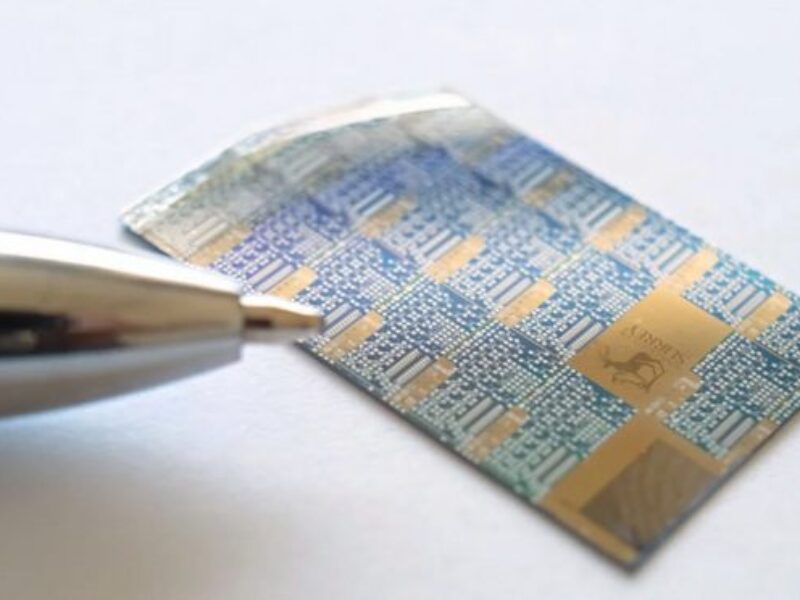
The multi-modal transistor (MMT) is a double-gated transistor that provides independent control of charge injection into the semiconductor channel.
The MMT was originally developed as a hardware AI computing element but also has the ability to simplify display circuits while improving performance and sustainability, the researchers have claimed.
Bestelink will present: Contact-Controlled Transistors as Sufficiently Fast Switches for Active-Matrix Pixel Circuits in paper 62.4. Sporea will present an invited paper 95.3 Pixel Design Techniques for 1Hz Refresh Rate LTPS Emissive Displays Leveraging Multimodal Transistor On- and Off-State Current Characteristics.
The topic is not new. At the 2021 SID International Symposium Sporea and Bestelink presented 22.2: Invited Paper: Opportunities for Multimodal Thin‐Film Transistors in Displays and Beyond.
But the technology is now showing promise in simulations of its uses with AMOLED and microLED displays. The technology can also be integrated into current production lines with minimal disruption, the researchers claim.
“In most displays, engineers try to eliminate the energy barriers that form where metals meet semiconductors because they restrict current flow. But instead of working around them, we’ve made those barriers central to how our transistors operate,” said Sporea in a statement issued by University of Surrey.
“Using these effects deliberately, we’ve shown that the electronic circuits at the heart of display screens can be made with fewer components and processing steps – reducing waste, cutting costs and improving performance.”
Sporea said that it also reduces power consumption in operation thus providing improved battery life for portable equipment and smartphones.
Bestelink said: “I’ve been working on this technology since my undergraduate days at Surrey, where I had the idea to develop a transistor based on neural behaviour, so seeing it evolve into something with real-world potential is incredibly rewarding.”
She said: “Beyond displays, it could also have major applications in areas like microfluidics, imaging arrays and hardware AI. We’re still actively researching the AI potential, but the implication for revolutionising manufacturing is clear – especially if we’re to achieve Net Zero.”
The multi-modal transistor now has US patent protection.
Related links and articles:
News articles:
Double-gated transistor enhances analog performance
Source-gate transistor offers better large-area electronics
High-resolution industrial TFT display modules
 If you enjoyed this article, you will like the following ones: don't miss them by subscribing to :