NVIDIA pushes Physical AI into real-world robotics deployments
NVIDIA is doubling down on “physical AI,” unveiling new simulation frameworks and foundation models while expanding partnerships with major robotics players to accelerate real-world deployments. Announced at GTC, the move highlights how AI-driven robotics is shifting from experimentation to production scale.
For eeNews Europe readers, the development signals a clear inflection point: robotics is becoming a core pillar of industrial digitalization, with implications across manufacturing, logistics, and healthcare.
Expanding the robotics ecosystem
NVIDIA is working with a wide range of robotics leaders — including ABB Robotics, FANUC, KUKA, Universal Robots, and YASKAWA — to build and deploy AI-enabled machines using its full-stack platform. The company also introduced new NVIDIA Cosmos world models, Isaac simulation frameworks, and Isaac GR00T models aimed at accelerating robot development and deployment.
“Physical AI has arrived — every industrial company will become a robotics company,” said Jensen Huang, founder and CEO of NVIDIA. “NVIDIA’s full-stack platform — spanning computing, open models and software frameworks — is the foundation for the robotics industry, uniting a worldwide ecosystem to build the intelligent machines that will power the next generation of factories, logistics, transportation and infrastructure.”
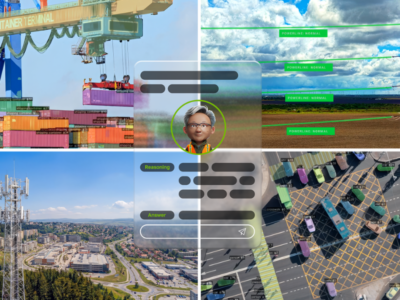
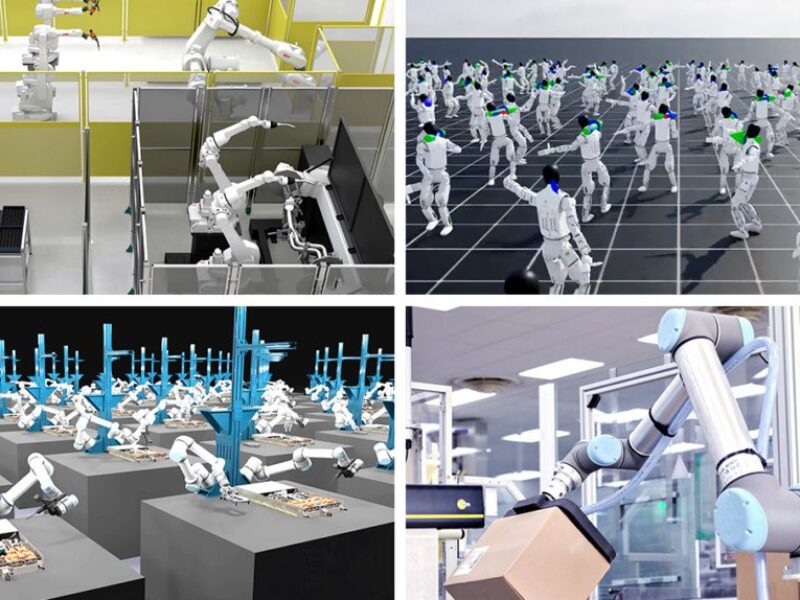
A key element of this push is simulation. With more than 2 million robots already installed globally, leading vendors are integrating NVIDIA Omniverse and Isaac tools to create digital twins for virtual commissioning. These allow manufacturers to design and validate production systems before physical deployment, reducing risk and speeding time to market. At the edge, NVIDIA Jetson modules are being embedded into controllers to enable real-time AI inference on production lines.
From robot brains to humanoids
Beyond industrial automation, NVIDIA is targeting more advanced robotics use cases. Companies such as Skild AI and World Labs are using Cosmos models and Isaac simulation to develop “generalist” robot brains capable of learning multiple tasks with minimal retraining.
The company also introduced Cosmos 3, described as a world foundation model that combines synthetic data generation, reasoning, and action simulation — a step toward more autonomous and adaptable machines.
Humanoid robotics is another focus area. Developers including Agility, Figure, and Boston Dynamics are using NVIDIA’s simulation and training stack to accelerate development. New tools such as Isaac Lab 3.0 and GR00T N models aim to improve dexterity, learning speed, and deployment readiness. NVIDIA also previewed GR00T N2, a next-generation model designed to boost robot success rates in unfamiliar environments.
Industrial and healthcare impact
The ecosystem approach is already translating into real-world applications. In manufacturing, partnerships are enabling high-precision assembly and flexible automation, including deployments at Foxconn and Samsung. In logistics, NVIDIA is working with KION Group and Accenture on AI-powered warehouse systems using digital twins and autonomous vehicles.
Healthcare is another emerging opportunity. Companies such as CMR Surgical, Johnson & Johnson MedTech, and Medtronic are leveraging NVIDIA’s simulation and compute platforms to train and validate surgical robots under strict safety requirements.
At the same time, NVIDIA is fostering a broader innovation pipeline through its Inception startup program and collaborations with platforms like Hugging Face. By opening access to its robotics stack, the company aims to scale physical AI development across both large enterprises and startups.
Overall, NVIDIA’s latest push underscores a broader industry trend: robotics is rapidly evolving into a software-defined, AI-driven domain, with simulation and foundation models at its core.
 If you enjoyed this article, you will like the following ones: don't miss them by subscribing to :