NXP and GE HealthCare bring edge AI into acute care
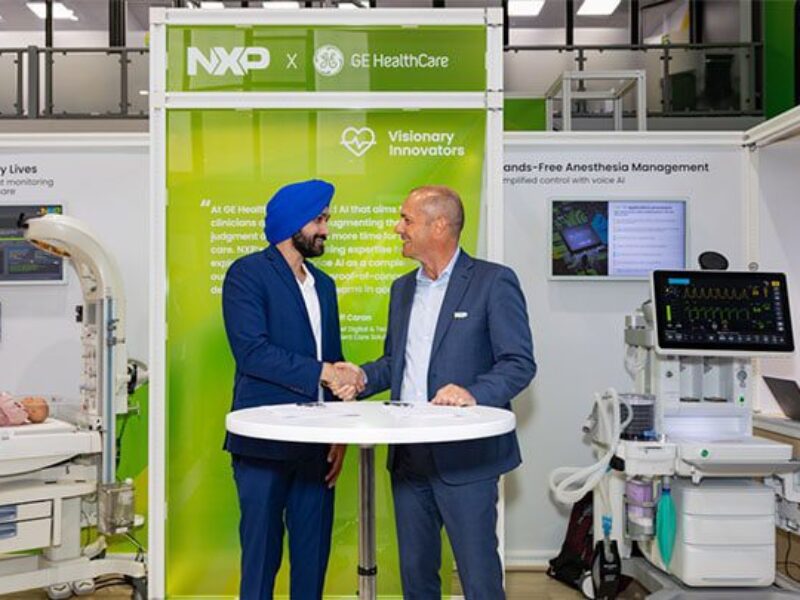
NXP Semiconductors and GE HealthCare are teaming up to bring edge AI deeper into acute care environments, starting with new anesthesia and neonatal care concepts unveiled at CES 2026. The collaboration focuses on low-latency, on-device intelligence designed to support clinicians directly at the point of care.
This partnership is a concrete example of how edge AI is moving from theory into regulated, real-world medical environments. It also highlights how secure processors, NPUs and software toolkits are becoming essential building blocks for next-generation healthcare devices.
Edge AI where latency matters
Acute care settings such as operating rooms and neonatal intensive care units demand immediate, reliable responses. According to the companies, processing data locally on the device avoids cloud-related delays and helps ensure consistent performance even in connectivity-constrained environments.
The idea is to embed intelligence directly into point-of-care equipment, delivering actionable insights without compromising security or privacy. Moreover, NXP’s application processors with integrated neural processing units, along with a standalone NPU option, form the hardware foundation, supported by the company’s eIQ AI Toolkit for on-device model deployment.
Two concepts: anesthesia and neonatal monitoring
The first concept targets anesthesia delivery in the operating room. It introduces edge AI-based voice interaction that allows anesthesiologists to control equipment hands-free using real-time voice commands. The aim is to reduce cognitive load, alarm fatigue and the risk of human error in busy surgical environments, while allowing clinicians to stay focused on the patient.
The second concept addresses neonatal care through intelligent, live monitoring. Using on-device vision and agentic AI, the system can detect whether an infant is crying or resting, identify foreign objects in the bed, or recognize if a baby has rolled onto their stomach. Events are logged locally and clinicians are alerted when appropriate.
All image processing happens on the device, with no images leaving the system. This local processing model meets strict security and privacy requirements, a critical issue for AI-enabled medical devices in Europe and beyond.
Responsible AI and future potential
Both concepts are developed under GE HealthCare’s Responsible AI principles, covering safety, security, privacy, transparency and fairness. While the demonstrations focus on anesthesia and neonatal use cases, the companies see broader potential.
“At GE HealthCare, we build AI that keeps clinicians at the center, assisting clinical judgment and freeing up time for patient care. Collaborating with NXP helps us explore secure on-device AI as a complement to our cloud solutions, with concepts designed to support care teams in acute settings.”
“This collaboration brings together GE HealthCare’s clinical trust and decades of medical technology innovation with NXP’s eIQ AI enablement and deep experience in secure, high-performance edge computing to provide safe, secure, and practical edge AI solutions to clinicians and patients. Together, we aim to enable more personalized care, from continuous monitoring in the NICU and hands-free interaction with anesthesia equipment to exploratory research concepts such as AI-driven risk prediction, automated triage, and personalized treatment recommendations.”
NXP and GE HealthCare are demonstrating the two concepts at CES 2026 in NXP’s Pavilion, showing how edge AI is becoming a core technology in medical device innovation.
 If you enjoyed this article, you will like the following ones: don't miss them by subscribing to :