POLYN tapes out analogue neuromorphic chip
POLYN Technology has completed the tape-out of its first product chip, which features an analogue neuromorphic core based on a Voice Activity Detection neural network model.
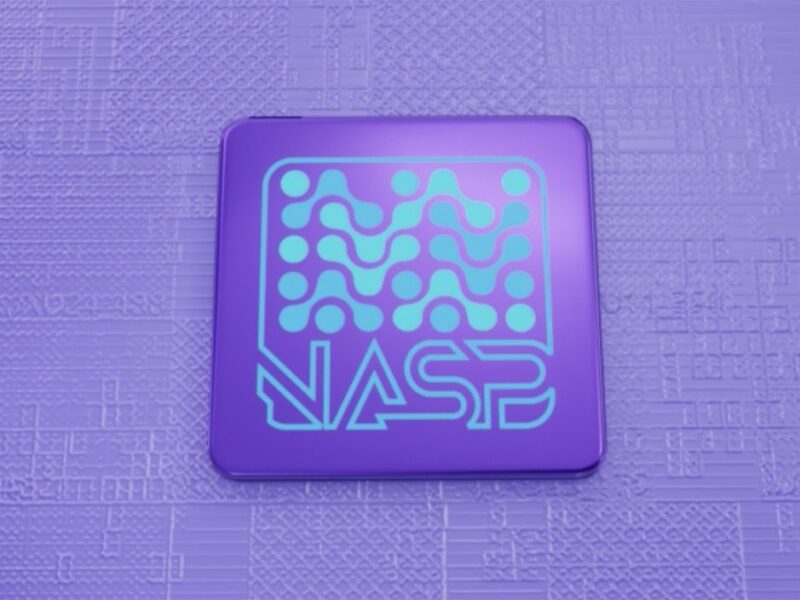
The chip will be used to qualify the NASP (Neuromorphic Analogue Signal Processing) platform technology and initial customer products while demonstrating the performance and robustness of the NASP technology.
“This is a considerable milestone in NASP chips development toward our mission to bring energy-efficient neuromorphic solutions to market,” said Aleksandr Timofeev, CEO of POLYN. “Our NASP technology platform is one-of-a-kind, and its implementation called for significant engineering ingenuity protected by numerous patents.”
POLYN has designed and implemented a sophisticated neural network compiler and a tailored EDA flow using standard Cadence tools, to transform a trained digital neural network model into mathematically equal analogue neuromorphic cores. This flow efficiently generates a cohesive neural network layout comprising thousands of neurons and connections with resistive weights. The flow can be employed at any semiconductor foundry.
POLYN has seamlessly integrated Cadence Virtuoso for custom analogue design and Innovus Implementation System for digital place and route, clock tree synthesis, and timing closure with its proprietary NASP platform. This allowed the engineering team to streamline the chip development process and meet aggressive time-to-market goals.
NASP technology, developed by POLYN, stands at the forefront of edge and sensor signal AI processing, uniquely enabling cloudless, on-chip AI for various IoT devices while ensuring privacy and sustainability. The POLYN neuromorphic architecture processes input signals in a true parallel asynchronous mode, providing unprecedented low latency and low power consumption. Calculations do not require CPU usage or memory access. The technology facilitates the seamless deployment of edge AI computing across real-time IoT applications, including automotive, consumer electronics, industrial IoT, machine-to-human interfaces, wearables, and more.
 If you enjoyed this article, you will like the following ones: don't miss them by subscribing to :