Quasicrystals make 3D printed aluminum stronger
Quasicrystals increase the strength of 3D-printed aluminum, researchers of NIST discovered, making it possible to use in lightweight, high-strength objects such as airplane parts
From the NIST report:
Quasicrystals are like ordinary crystals but with a few key differences. A traditional crystal is any solid made of atoms or molecules in repeating patterns. Table salt is a common crystal, for example. Salt’s atoms connect to make cubes, and those microscopic cubes connect to form bigger cubes that are large enough to see with the naked eye.
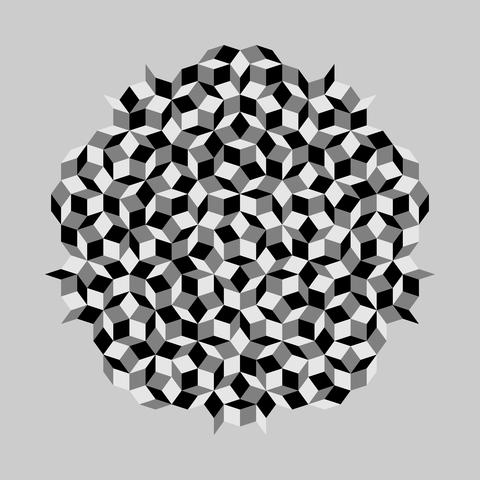
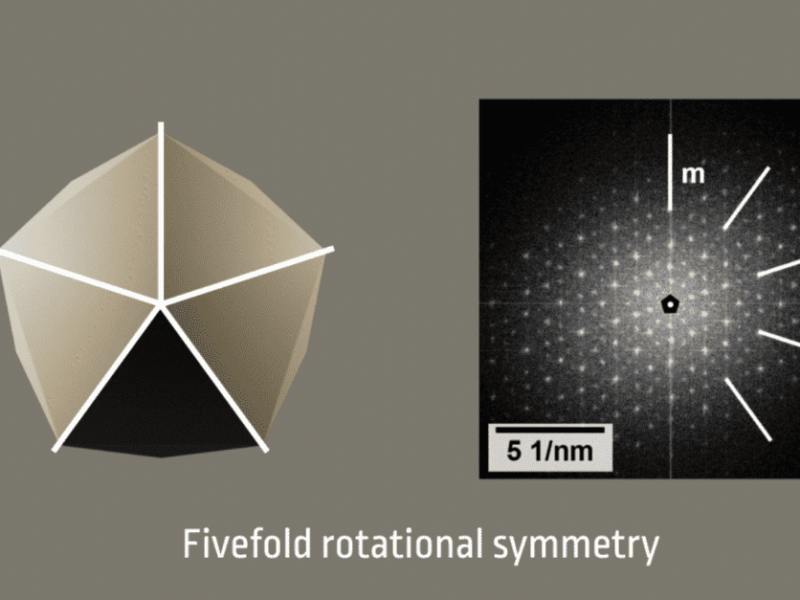
There are only 230 possible ways for atoms to form repeating crystal patterns. Quasicrystals don’t fit into any of them. Their unique shape lets them form a pattern that fills the space, but never repeats.
Dan Shechtman, a materials scientist at Technion-Israel Institute of Technology, discovered quasicrystals while on sabbatical at NIST in the 1980s. Many scientists at the time thought his research was flawed because the new crystal shapes he found weren’t possible under the normal rules for crystals. But through careful research, Shechtman proved beyond a doubt that this new type of crystal existed, revolutionizing the science of crystallography and winning the chemistry Nobel Prize in 2011
Working in the same building as Shechtman decades later, Andrew Iams found his own quasicrystals in 3D-printed aluminum.
How Do Quasicrystals Make Aluminum Stronger?
In metals, perfect crystals are weak. The regular patterns of perfect crystals make it easier for the atoms to slip past each other. When that happens, the metal bends, stretches or breaks. Quasicrystals break up the regular pattern of the aluminum crystals, causing defects that make the metal stronger.
Normal aluminum melts at temperatures of around 700 degrees C. The lasers in a 3D printer must raise the temperature much, much higher: past the metal’s boiling point, 2,470 degrees C. This changes a lot of the properties of the metal, particularly since aluminum heats up and cools down faster than other metals.
In 2017, a team at HRL Laboratories, based in California, and UC Santa Barbara discovered a high-strength aluminum alloy that could be 3D printed. They found that adding zirconium to the aluminum powder prevented the 3D-printed parts from cracking, resulting in a strong alloy.
The NIST researchers set out to understand this new, commercially available 3D-printed aluminum-zirconium alloy on the atomic scale. “In order to trust this new metal enough to use in critical components such as military aircraft parts, we need a deep understanding of how the atoms fit together,” said Zhang.
The NIST team wanted to know what made this metal so strong. Part of the answer, it turned out, was quasicrystals.
 If you enjoyed this article, you will like the following ones: don't miss them by subscribing to :