Reusing recycled solid state lithium metal battery cells
Researchers in the US have been working on ways to make solid state battery cells more suitable for recycling and reuse.
The team at Penn State reconfigured the design of a solid state battery cell with lithium metal anodes and LTO cathodes so that all their components can be easily recycled and resued in a new cell.
Traditionally, most of the core battery components have gone to waste because they mix during the recycling process, forming a “black mass”. This black mass is rich in materials needed for batteries but separating them out remains a challenge. In solid-state batteries, the use of solid electrolytes compounds this problem, as they become intermixed with the black mass.
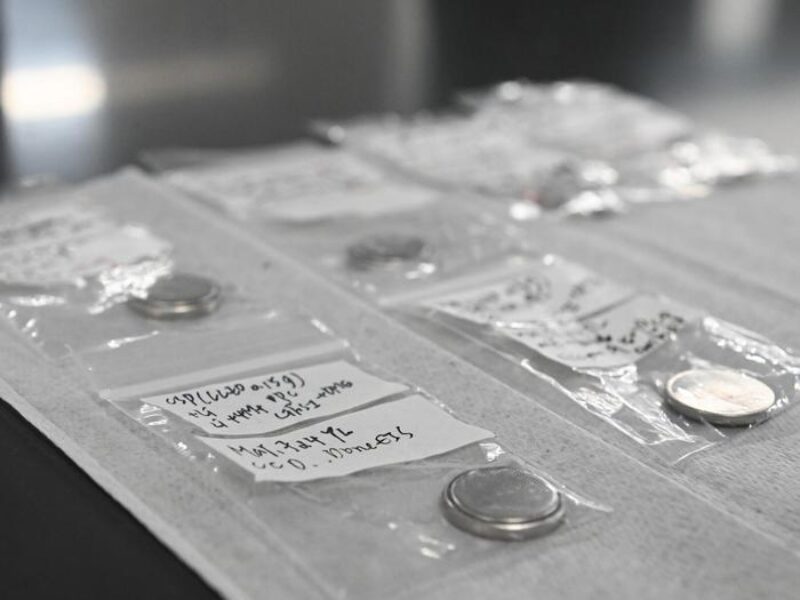
To more easily separate components from the other metal components in a coin cell, researchers inserted two polymer layers at the interfaces between the electrode and the electrolyte prior to the start of the recycling process.
- Solid state battery for smartphones
- 850Wh/l for solid state lithium metal battery cell
- 3D printing solid state lithium metal battery cells
“As the need for rechargeable batteries grows, we need to think about the end-of-life of this technology,” said Prof Enrique Gomez in chemical engineering in the Penn State College of Engineering. “We hope our work highlights the possibilities in recycling of solid-state batteries, with the help of some key design elements.”
“We proposed that by dissolving the polymer layer during the recycling process, you can easily separate the electrode from the electrolyte,” said Yi-Chen Lan, doctoral student in chemical engineering and first author on the paper. “Without the polymer layer separating them, you would have the electrode and electrolyte mixed together, which makes them hard to recycle.”
Once the researchers successfully separated out the components, they made a composite with the recovered metals and electrodes using cold sintering with applied pressure using solvents. Cold sintering was developed in 2016 by a team of researchers led by Clive Randall, director of Penn State’s Materials Research Institute and distinguished professor of materials science and engineering. Gomez and his team recently demonstrated the recycling of solid-state electrolytes using cold sintering.
“We used cold sintering to combine the recovered electrodes with recovered composite solid electrolyte powders, then reconstructed the battery with the polymer layers added,” said Po-Hao Lai, a doctoral student in chemical engineering and co-author on the paper. “This enables us to recycle the whole battery, which we are then able to recycle again after its use.”
After testing its performance, the researchers found that the reconstructed battery achieved between 92.5% and 93.8% of its original discharge capacity.
“While the commercialization of all-solid-state lithium batteries is still in its early stages, our work provides important insights and ideas for designing recyclable versions of these batteries,” Lan said. “While we’re not quite there yet, the long-term goal is to apply this innovation to larger batteries that could be used in devices like cell phones and laptops, once all-solid-state technology becomes more prevalent.”
 If you enjoyed this article, you will like the following ones: don't miss them by subscribing to :