Sensata launches high-voltage insulation monitor
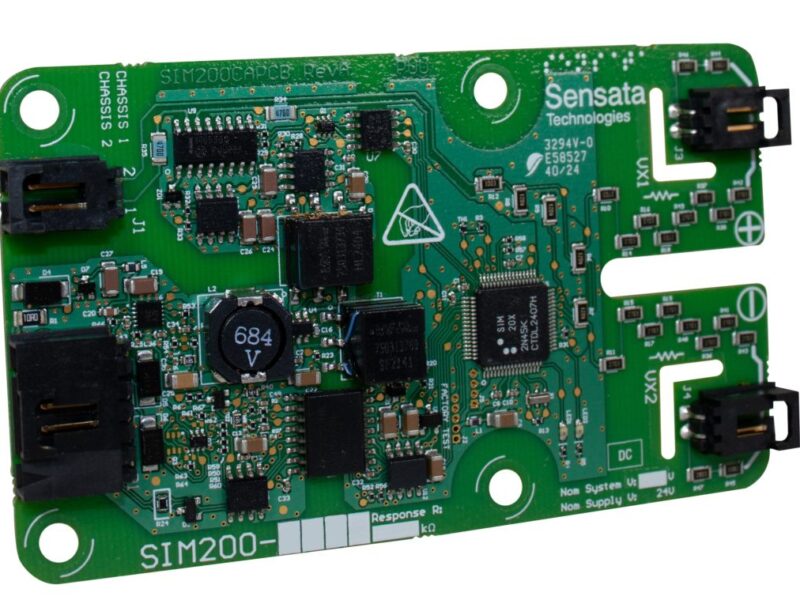
Sensata Technologies has launched the SIM200 Insulation Monitoring Device (IMD), designed to enhance safety in the next generation of the electric vehicle ecosystem. This robust insulation monitor offers total capacitance measurement and continuous monitoring capabilities for advanced high-voltage systems of up to 60 V.
In a high-voltage system, electrical isolation is achieved by employing non-conductive barriers such as insulation on cables, plastic housings on components, and maintaining a safe physical distance. An insulation monitor is crucial for overseeing these systems for failures that could allow excess current to flow where it should not, thus posing a risk of electrocution.
Utilising its patented signal injection algorithm and processing capabilities, the SIM200 is designed to deliver continuous “always on” monitoring — even when the system is turned off or undergoing significant changes in voltage. This insulation monitor also has the ability to oversee the total stored capacitance in the system – a functionality that is critical for safety in tomorrow’s high-powered megawatt charging applications and for meeting future insulation monitoring specifications.
Leveraging technology from Sensata’s 2021 acquisition of Sendyne Corp, the SIM200 monitors the insulation of Isolated Terra systems by injecting a small voltage through isolation resistors onto both the positive and negative high-voltage rails. The injection pulses alternate between the positive and negative rails at set time periods, and the system monitors these pulses against the system voltage to detect any safety concerns and assist in triggering a shutdown if necessary.
Engineered to operate seamlessly across EV charging and other platforms, the SIM200 is available in a range of standard modules configured for applications from 60 V to 1500 V. The device is UL 2231-2 recognised and has been tested to meet IEC 61557-8 requirements. Its communication framework has also been designed with input from some of the world’s largest OEMs, featuring dual dedicated fault state outputs, robust self-diagnosis functionality, and a modular CAN 2.0B interface for detailed system information.
 If you enjoyed this article, you will like the following ones: don't miss them by subscribing to :