Siemens unveils industrial AI technologies at CES 2026
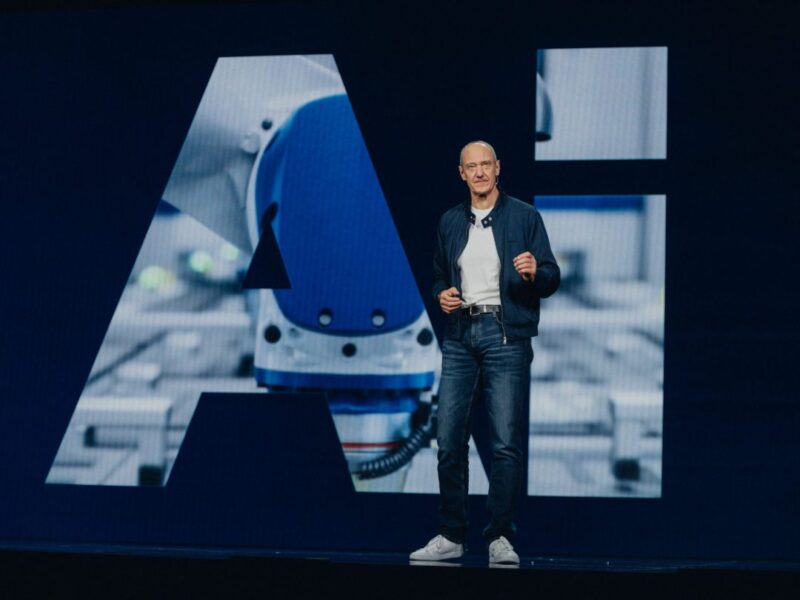
At CES 2026, Siemens used its keynote slot to underline how artificial intelligence is moving from experimentation into the core of industrial operations. The company rolled out new software, partnerships and use cases aimed at accelerating what it calls the industrial AI revolution.
For eeNews Europe readers, the announcements matter because they directly touch key areas such as semiconductor design, factory automation, digital twins and AI-enabled engineering workflows. Siemens’ strategy also highlights how partnerships with NVIDIA and others could reshape how complex systems are designed, simulated and operated.
Industrial AI as an operating system
A central theme at CES was the expansion of Siemens’ long-standing partnership with NVIDIA to build what the companies describe as an Industrial AI Operating System. The goal is to apply AI end-to-end across the industrial value chain, from design and engineering through manufacturing, operations and supply chains.
“Just as electricity once revolutionized the world, industry is shifting toward elements where AI powers products, factories, buildings, grids and transportation. Industrial AI is no longer a feature; it’s a force that will reshape the next century. Siemens is delivering AI-native capabilities, intelligence embedded end-to-end across design, engineering and operations, to help our customers anticipate issues, accelerate innovation and reduce cost,” said Roland Busch, President and CEO of Siemens AG.
As part of the collaboration, NVIDIA will supply AI infrastructure, simulation libraries and models, while Siemens will contribute industrial AI expertise and its software and hardware portfolio. One concrete outcome is a plan to create fully AI-driven, adaptive manufacturing sites, starting in 2026 with the Siemens Electronics Factory in Erlangen, Germany, as a blueprint.
NVIDIA founder and CEO Jensen Huang added: “Generative AI and accelerated computing have ignited a new industrial revolution, transforming digital twins from passive simulations into the active intelligence of the physical world.”
Digital Twin Composer and real-world use
Siemens’ main product launch at CES was Digital Twin Composer, due on the Siemens Xcelerator Marketplace in mid-2026. Moreover, the software combines Siemens’ digital twin technology with NVIDIA Omniverse libraries and real-time engineering data, allowing companies to build high-fidelity 3D models of products, processes or entire plants and simulate changes over time.
A reference customer is PepsiCo, which is using Digital Twin Composer to model upgrades at selected U.S. manufacturing and warehouse sites. By simulating machines, conveyors and operator paths with physics-level accuracy, PepsiCo reports a 20% increase in throughput on initial deployments and Capex reductions of 10 to 15%.
Copilots and broader AI applications
Beyond digital twins, Siemens unveiled nine new AI-powered industrial copilots spanning design, lifecycle management, manufacturing and operations. These include copilots for Teamcenter, Polarion and Opcenter, aimed at speeding up product data navigation, automating compliance and improving shop floor efficiency.
Siemens also highlighted AI-driven work in life sciences, energy and manufacturing, including faster drug discovery through its Dotmatics acquisition and a collaboration to bring industrial AI to Meta Ray-Ban AI Glasses for hands-free shop floor assistance. Together, the announcements show Siemens positioning AI as a practical, scalable tool across the industrial landscape rather than a future promise.
 If you enjoyed this article, you will like the following ones: don't miss them by subscribing to :