
Simple Runaway Battery tester improves safety
A team including researchers from the University of Tokyo has developed a simple, cost-effective method to test the safety of lithium-ion batteries
From the University of Tokyo news desk:
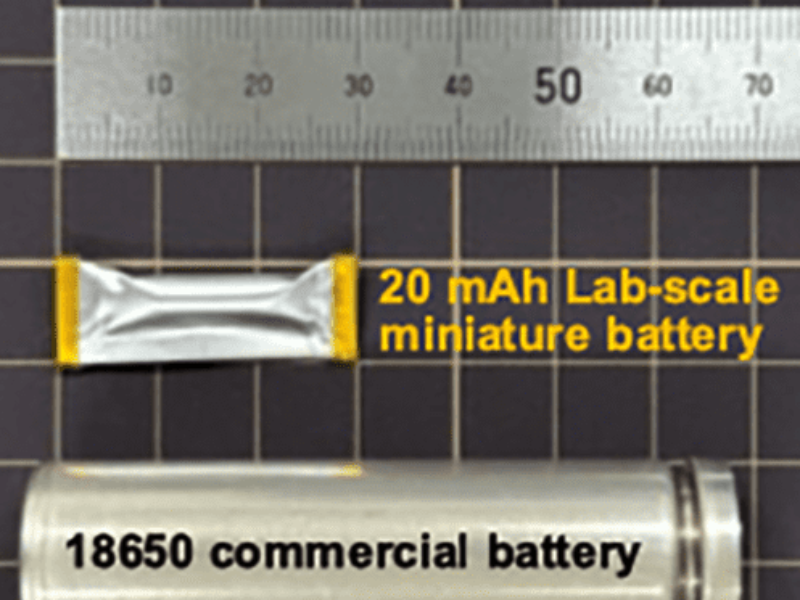
Overheating batteries are a serious risk, in the worst cases leading to fires and explosion. A team including researchers from the University of Tokyo has developed a simple, cost-effective method to test the safety of lithium-ion batteries, which opens up opportunities for research into new and safer batteries for the future. The researchers created an intentionally unstable battery which is more sensitive to changes that could cause overheating. The battery is one-fiftieth the size of conventional batteries, so is less resource intensive and tests can be carried out in a smaller lab environment.
“Current safety testing methods depend on large-capacity, commercial-scale batteries, which require substantial material resources, complex manufacturing processes and stringent explosion-proof standards,” explained Professor Atsuo Yamada from the Graduate School of Engineering. “This renders thermal runaway testing inaccessible for most academic and research institutions, significantly limiting the development of safer and more advanced next-generation batteries.”
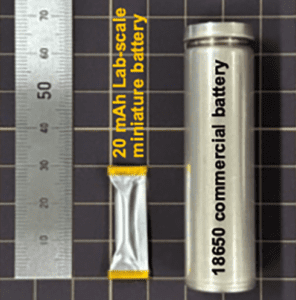
To overcome this limitation, a team from the University of Tokyo and Japan’s National Institute for Materials Science has developed an innovative method to evaluate thermal runaway by designing a mini battery intentionally more prone to thermal runaway (and therefore more dangerous). They also created a simple equation, which incorporates data on battery heat accumulation and dissipation, so they could calculate what they termed the thermal runaway factor (TRF).
“Developing a battery that was intentionally dangerous was the key. According to TRF, batteries generate more heat with higher energy, higher volume-to-surface area (V/S) ratios and lower specific heat capacities (the amount of heat required to raise the temperature of one gram of the battery by one degree Celsius) of their materials,” explained Yamada. “Since increasing battery capacity wasn’t feasible for small-scale tests, we focused on reducing the heat-release capability by increasing the V/S ratio, minimizing the use of high specific heat capacity materials and removing nonheat-generating components like the external battery case.”
 If you enjoyed this article, you will like the following ones: don't miss them by subscribing to :