ST eyes Qualcomm’s cellular chip and wireless IP in strategic deal
 Cette publication existe aussi en Français
ST has signed a strategic deal to use Qualcomm WiFi combo chips alongside its STM32 processors that will also give it access to cellular chips for the Internet of Things (IoT).
The deal between ST and Qualcomm is significant as ST already has a range of wireless microcontrollers with Bluetooth and Zigbee. The Qualcomm chips though add WiFi alongside Bluetooth and Thread. It is also expect to include IP sharing and co-development.
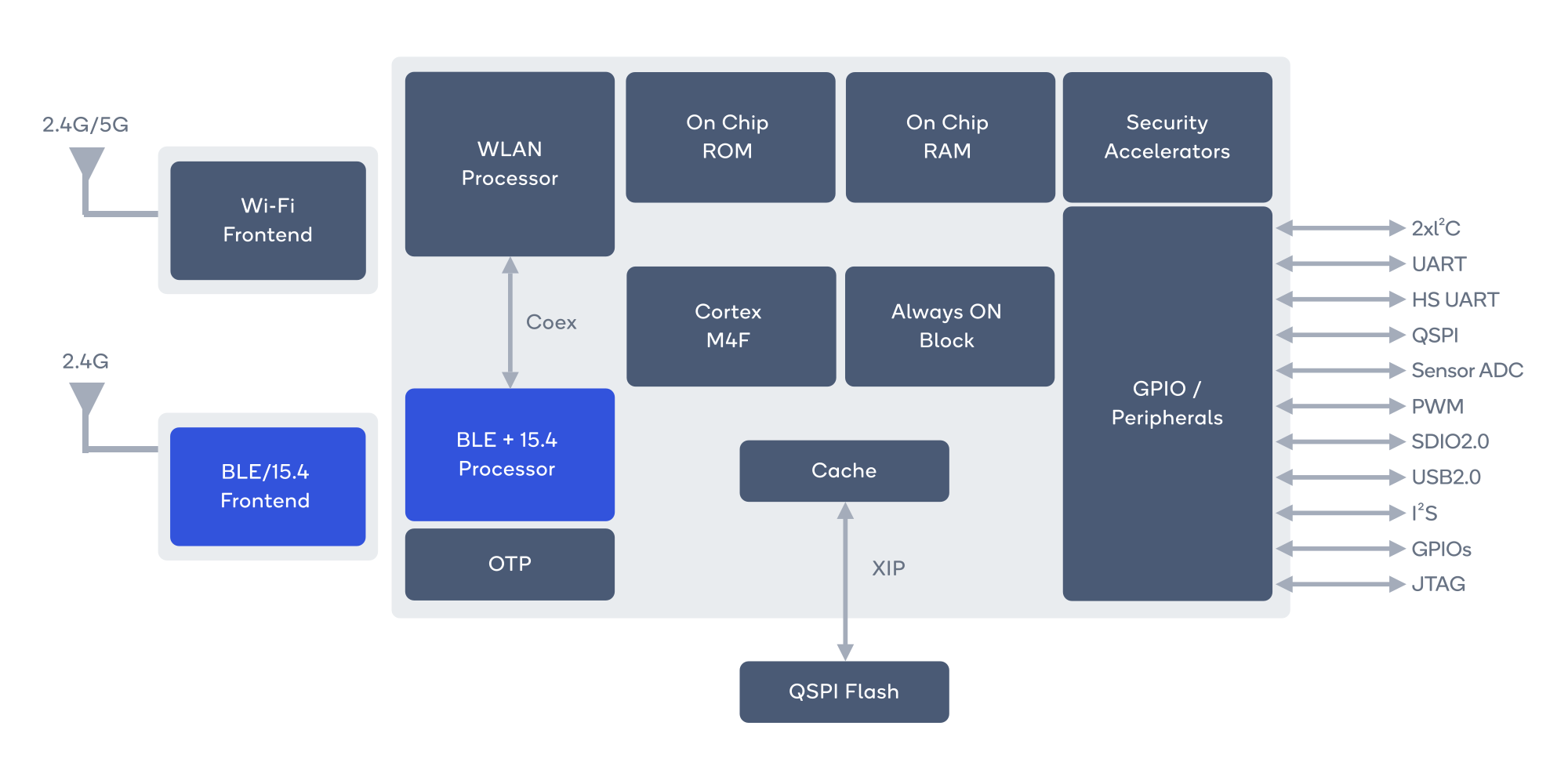
The deal will see ST introduce self-contained modules using the Qualcomm Technologies WiFi/Bluetooth/Thread combo SoC portfolio, which can be integrated with any STM32 general-purpose microcontroller.
“We have been working together for more than ten years but we are adding a new step to the cooperation with system level integration and self contained modules,” said Ricardo de sa Earp group vice president and general manager of the microcontroller division at STMicroelectronics tells eeNews Europe.
“Wireless technology will be key to the pervasiveness of edge AI across industrial, buildings and personal applications and that complements our existing BLE and Zigbee sub GHz portfolio,” he said.
ST does not have WiFi or cellular RF designs on the market and sees the Qualcomm deal as a way of quickly adding the capability.
“We are working with Qualcomm to have the best in class connectivity solutions with WiFi, BLE and Thread and we plan to define together a roadmap that extends to cellular and here is the most efficient way to have a fast solution to the market,” said de sa Earp.
This is a first step in a collaboration on a roadmap of WiFi/Bluetooth/Thread combo SoC products over time, with the intention to extend into cellular connectivity for industrial IoT applications.
Discussions on the roadmap and IP are not disclosed, he said. “This is entering into the roadmap of technologies we are developing but clearly the main target is to have a joint definition of what we will develop together with Qualcomm for the IP and the next steps on the roadmap,” he told eeNews Europe.
The interface between the wireless module and the STM32 processors will be disclosed early next year. Neither company would comment on the potential for integrating the STM32 processor with the Qualcomm combo chips in a single package for IoT applications.
The deal gives Qualcomm access to 1m developers from 100,000 using the STM32 processors and development tools.
“For us the strategic collaboration is part of our roadmap for diversification of the smartphone business for other industry sectors and we wee IoT as an opportunity where we can enable IoT devices connected ot the cloud with more intelligence,” said Enrico Salvatori, president of Qualcomm Europe. “The combination is covering the three technologies and is an initial step.”
The initial product offerings resulting from this collaboration are expected to be available to OEMs in Q1 2025, with broader availability to follow.
“With the installed base of consumer, commercial and industrial connected devices expected to reach well over 80 billion units by 2028, the proliferation of high-performance wireless connectivity solutions combined with a diverse suite of microcontrollers will be fundamental in enabling this next wave of wireless IoT innovation,” said Andrew Zignani, Senior Research Director, ABI Research.
 If you enjoyed this article, you will like the following ones: don't miss them by subscribing to :