
TMR sensor enables real-time monitoring of a wide range of metabolites
A UCLA-led team has developed an advanced sensor platform that measures metabolites — key molecules involved in sustaining life through metabolism — inside the body in real time
From the press release:
Life’s essential functions are powered by a set of compounds called metabolites, which are involved in every natural process including producing energy, regulating cell activity and keeping the body’s systems in balance. Tracking these molecules offers a window into the onset and status of many diseases, overall health, response to treatment and the intricate workings of biological systems.
However, today’s metabolite sensing methods fall short. Most rely on resource-intensive lab tests that give only brief snapshots from isolated samples. The few sensors that can track metabolites continuously are largely limited to detecting blood sugar.
An interdisciplinary research team led by the California NanoSystems Institute at UCLA, or CNSI, may have overcome these limitations. In a recent study published in the Proceedings of the National Academy of Sciences, the researchers demonstrated a sensor technology based on natural biochemical processes that was able to continuously and reliably measure multiple metabolites at once from a wide range of options.
“To understand how metabolites affect biological processes or reflect health, we need to monitor different groups of metabolites based on our specific interest,” said senior corresponding author Sam Emaminejad, an associate professor of electrical and computer engineering at the UCLA Samueli School of Engineering and a CNSI member. “So we aimed to develop a sensor platform that can be applied to a wide range of metabolites while ensuring reliable operation in the body — and for that, we tapped into natural metabolic processes.”
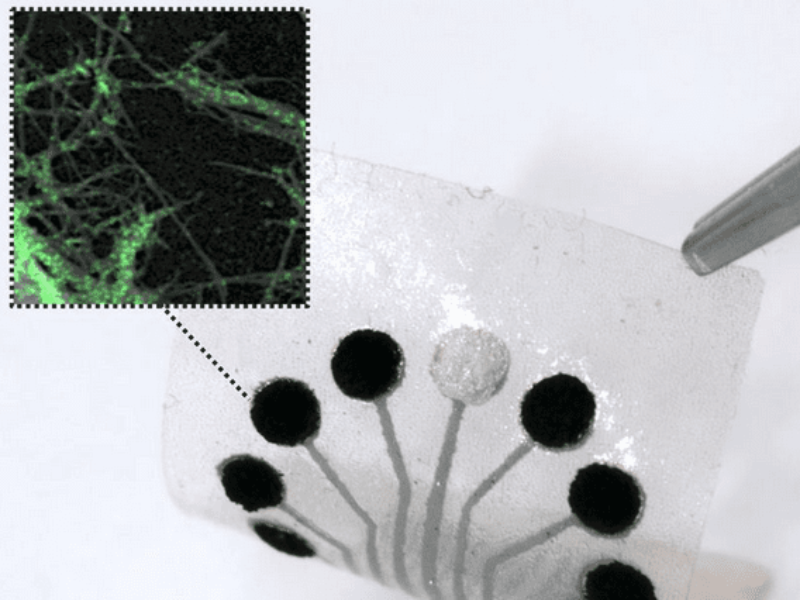
The sensors are built onto electrodes made of tiny cylinders called single-wall carbon nanotubes. These electrodes function like miniature biochemistry labs, using enzymes and helper molecules called cofactors to perform reactions that mirror the body’s metabolic processes. Depending on the target metabolite, the sensors either detect it directly or first convert it into a detectable form through a chain of intermediary enzymatic reactions.
Detection works through enzymes that specifically catalyze electron-exchanging reactions. On the electrodes’ surface, these reactions generate an electrical current that can be measured to determine metabolite levels. Meanwhile, other enzymes work in parallel to prevent false signals by neutralizing interfering molecules, much like how enzymes detoxify substances in our bodies.
To reflect this ability to run multiple reactions in sequence and parallel, the research team is calling their technology “tandem metabolic reaction-based sensors,” or TMR sensors for short … more
 If you enjoyed this article, you will like the following ones: don't miss them by subscribing to :