
UK faces critical skills gap in IoT component obsolescence
The UK faces a critical skills gap in obsolescence management for devices across the Internet of Things (IoT) according a report commissioned by design consultancy Bytesnap.
While 88% of UK electronics manufacturers face obsolescence problems every year, 81% report difficulty in finding reliable partners with the right capabilities. Redesign costs following component discontinuation can exceed £250,000 in complex systems.
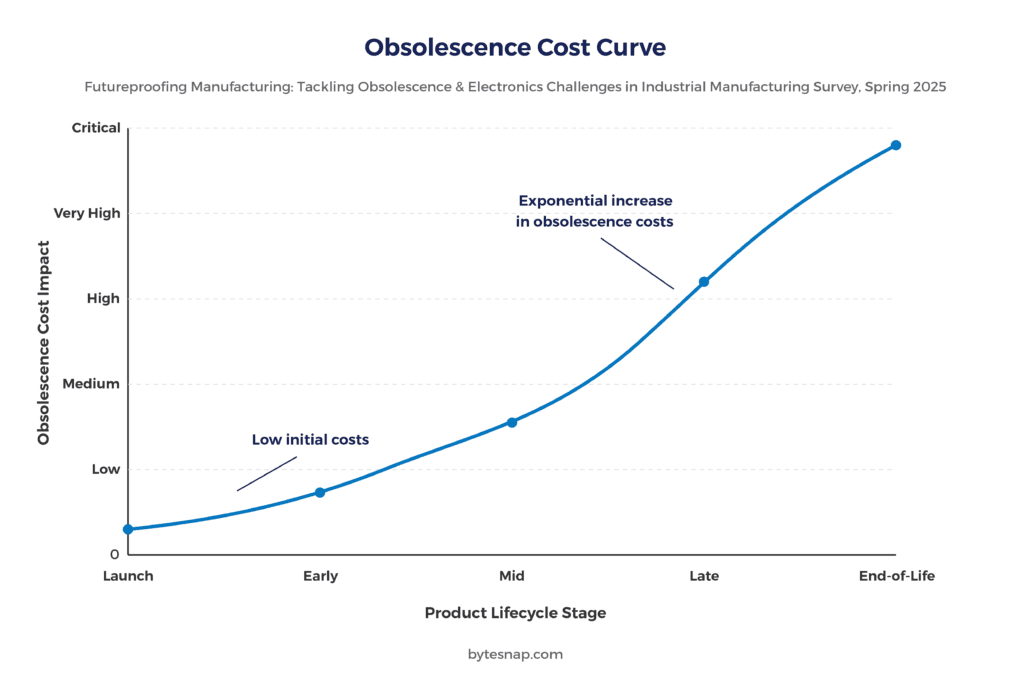
The report also highlights the wider ripple effect of obsolescence on connected systems. When a key component or module becomes unavailable, it can render entire product lines unsupportable — disrupting production schedules, affecting time-to-market, weakening supply chain reliability, and even compromising regulatory compliance in sectors like medical and energy.
- Guide details IoT protocols and standards
- Bytesnap launches design rescue service
- CEO interview: Bytesnap at 15
The report, Futureproofing Manufacturing: Tackling Obsolescence & Electronics Challenges in Industrial Manufacturing, is based on research with nearly 600 industry professionals and covers obsolescence in embedded electronics, components, and software systems.
The research coincides with World IoT Day today and highlights the obsolescence challenges across the manufacturing sector.
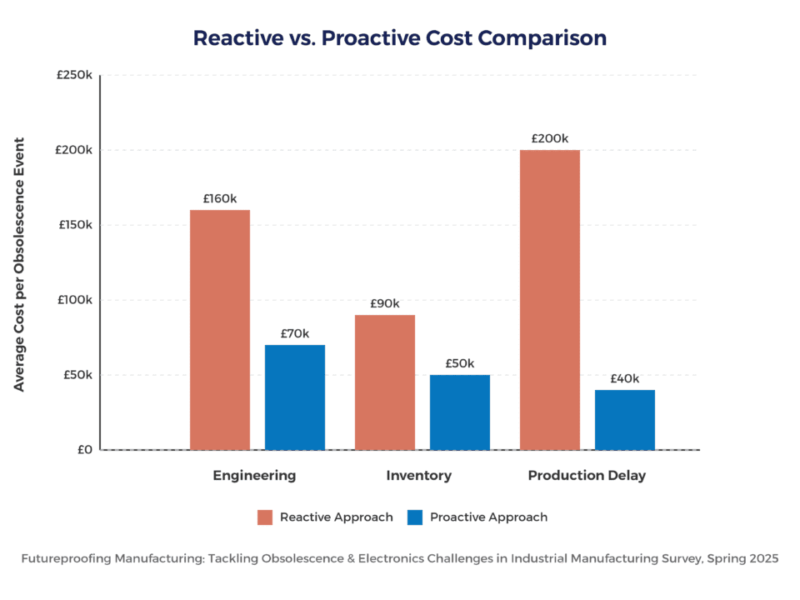
Proactive management (above) reduces costs by up to 80% compared to reactive approaches. Manufacturers adopting structured strategies are better able to maintain continuity and avoid last-minute design compromises.
89% of respondents consider AI integration important for future competitiveness. AI, often in tandem with connected hardware platforms, enables predictive maintenance, lifecycle forecasting, and quality control across electronics-heavy environments.
61% cite cost constraints as their main barrier to technology adoption. The report explores the tension between modernising legacy electronic systems—through IoT, automation, or redesign—and the realities of constrained capital budgets.
72% of manufacturers express a need for upskilling and training programmes. This demand is especially acute in advanced electronics, embedded systems, and AI—fields where knowledge gaps pose significant risks as experienced engineers retire.
“Our research uncovered that technological obsolescence has evolved from an occasional operational hiccup into a persistent strategic challenge for UK manufacturers,” said Dunstan Power, Director at ByteSnap Design. “What’s particularly striking is the electronics expertise gap. Despite strong demand for knowledge in component lifecycle management and embedded systems, many firms are left without adequate support. This bottleneck could delay product innovation and compromise long-term competitiveness.
“Those who invest in robust obsolescence management now will be best placed to harness emerging technologies like AI – often deployed alongside IIoT systems – for greater efficiency, system insight, and resilience.”
The report provides a structured approach to obsolescence management, including a readiness assessment framework, implementation roadmap, and strategies for long-term resilience. These tools are designed to help manufacturers—particularly those with electronics-intensive systems—transition from reactive fixes to proactive, lifecycle-aware planning.
www.bytesnap.com/futureproof-product-development-report/
 If you enjoyed this article, you will like the following ones: don't miss them by subscribing to :