Now, solar cells made with 2D semiconductor materials could reach double the efficiency of previous such devices by optimizing the materials and design, researchers show
Source: IEEE Spectrum
From the report:
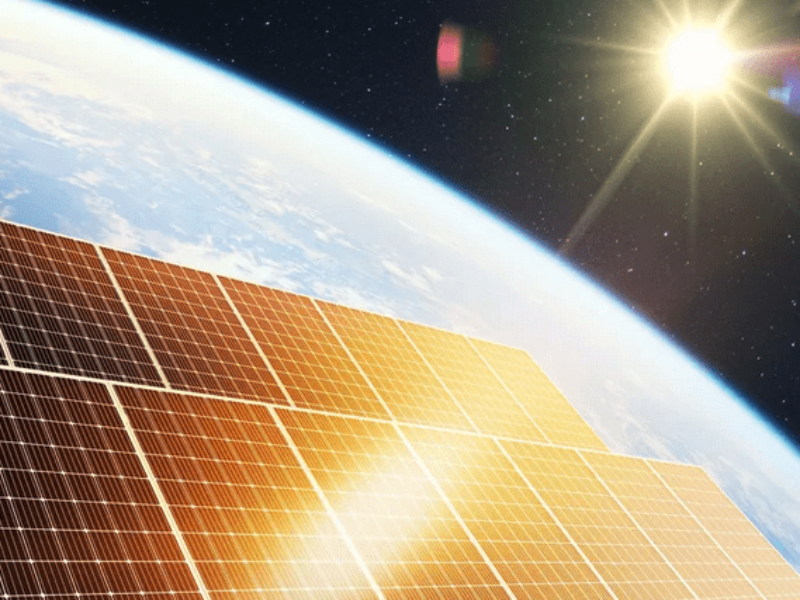
The ultralight, flexible solar cells could find use in space-based solar arrays, spacecraft, satellites, drones, wearables electronics, and “powering anything where weight is an issue,” says Deep Jariwala, an electrical and systems engineer at the University of Pennsylvania.
Jariwala and colleagues are researching solar cells made of the 2D semiconductors called transition metal dichalcogenides (TMDs), which include materials such as tungsten selenide and molybdenum disulfide. Researchers have investigated TMDs for over a decade as components for thin-film electronics and sensors. And in the past five years, there has been an increasing interest in their photovoltaic properties. While the first few TMD solar cells had efficiencies under 1 percent, Jariwala’s team reported devices with over 5 percent efficiency last year.
By optimizing the material thicknesses and other device parameters, and taking into account exciton physics, the researchers calculate a maximum efficiency of almost 13 percent.
That’s small compared to the 25 percent efficiency of state-of-the-art silicon solar cells. But those are micrometers or even millimeters thick. “The 2D semiconductor in this solar cell is 4 nanometers in thickness,” Jariwala says. “So there’s a giant difference in thickness and therefore overall weight. These could really give you record performance in terms of specific power. That’s the key advantage. For lightweight or remote power applications this is a great material.”
Power and Permanence in One Package
Given its theoretical efficiency and nanometer-scale thickness, the researchers calculated a specific power of nearly 200 W/g for their proposed devices. That’s as much as ten times the specific power of commercial cadmium telluride cells, they show in a 6 June article in the journal Device.
If you enjoyed this article, you will like the following ones: don't miss them by subscribing to :

eeNews on Google News