Autonomous face sensor integrates AI
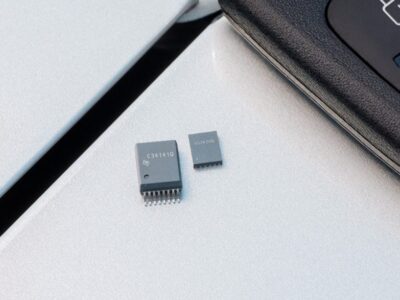
The µWAI (micro-WAY) autonomous imager is the size of a €1 coin and combines a sensor, ASIC and a battery. The module has an optimized algorithmic pipeline, in which results from a sequence of elementary algorithms are used to provide low-power wake-up modes and compact silicon implementation to keep costs down.
The smart image sensor features auto-exposure for lighting conditions and 88dB dynamic range, as well as motion detection and feature extraction, and AI-based object recognition.
This allows the imager to open up systems for just a few pJ/pixel/frame. A typical discrete camera plus processor implementation would require about 10^4 more energy than µWAI, Leti said.
“The recognition engine is optimized to recognize faces when movement is detected. CEA-Leti’s team is working hand-in-hand with STMicroelectronics to develop specific smart-imager products as we consider extending the technology to other use cases,” said Antoine Dupret, CEA-Leti’s industrial partnership manager
The unit consumes 3 to 6 microwatts and should achieve a five-year, always-on CR1025 battery lifetime.
Applications and functions include automatic switching and face identification in mobile devices, contact-less smart switching of household appliances and sport-and-entertainment devices in smart homes. µWAI also provides face recognition, people counting, alarm triggering in smart buildings, vehicle-interior situation awareness, driver identification, parking-situation awareness and a smart-unlocking system in automobiles.
Related links and articles:
News articles:
- MEMS startup ramps microphone production with Tower
- Deep learning processor for always-on audio, sensor apps
- AI SoC enables smart tiny edge devices
Popular articles on eeNews Europe
- 22 new 200mm fabs in capacity boom
- Boom quarter for top 10 semiconductor companies
- Raspberry Pi shortage driven by demand
- Newport Wafer Fab faces Chinese takeover
- Swiss centre aims for 100 qubit quantum computer
- ST looks to combine GaN power with microcontrollers
 If you enjoyed this article, you will like the following ones: don't miss them by subscribing to :