New PMIC facilitates energy harvesting from light sources
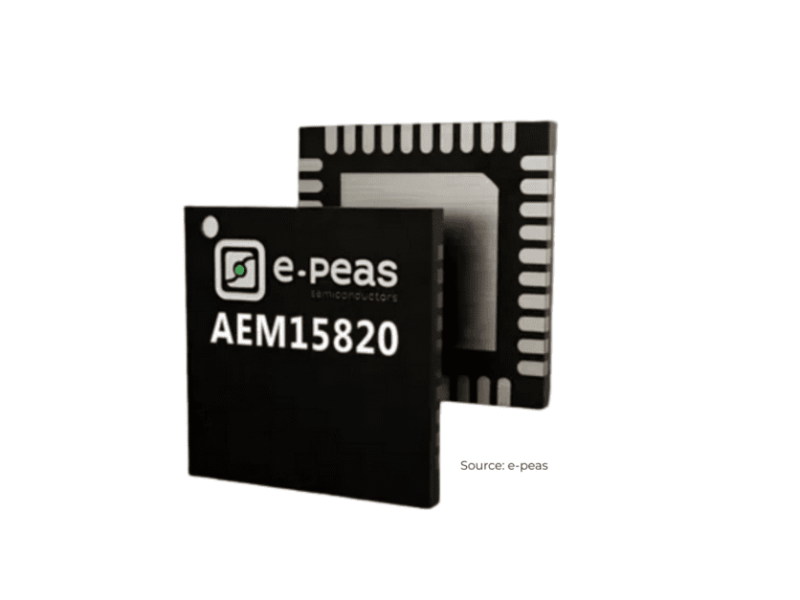
e-peas has introduced the AEM15820, an energy-harvesting PMIC designed to extract maximum power from modern hybrid photovoltaic (PV) cells. According to the company, these hybrid devices harvest energy from both indoor and outdoor light, producing anything from a few microwatts to multiple watts.
For eeNews Europe readers, this development is of interest because it signals a shift toward practical, mass-market light-powered devices. The AEM15820’s dynamic operating range and integration level could make it a useful reference for engineers designing next-generation wearables, IoT modules, and smart outdoor systems.
Expanding the viability of hybrid PV
Hybrid PV cells have gained attention for their ability to generate energy in diverse lighting conditions, unlike traditional PV technologies optimized for either indoor or outdoor use. According to e-peas, their broad output range — spanning microwatts under indoor illumination to several watts in sunlight — positions them as an attractive solution for consumer electronics, sensor nodes, and portable outdoor gear.
The AEM15820 directly addresses this variability, the company indicates. As a single-chip solution, it manages the entire μW-to-W spectrum, enabling engineers to design self-charging devices such as headphones, charging cases, e-readers, hiking computers, remote security cameras, and more. By supporting both batteries and lithium-ion capacitors (LiC), the device can be a solution for long-lifetime consumer products and ruggedized outdoor applications.
Architecture built for efficiency and flexibility
At the system level, the PMIC features an ultra-low-power cold start of 5 µW at 275 mV, ensuring operation even in low-light indoor environments, the company notes. It delivers regulated output voltages from 0.6 V to 3.3 V at up to 100 mA and offers a configurable source regulation mode.
The AEM15820 can be fully configured via GPIO or I²C, giving designers control over storage protection thresholds, thermal protection, load path behavior, and source voltage regulation. To maintain maximum efficiency across shifting light conditions, it incorporates both low-power and high-power boost converters and automatically switches between them. A 5-V DC input enables fast charging from mains power when needed.
“The AEM15820 is the first single-chip PMIC that truly spans the full dynamic range of hybrid cells, from microwatts to watts, making continuous charging of consumer devices practical at scale, covering both indoor and outdoor environments,” said Geoffroy Gosset, CEO & Co-founder at e-peas. “This breakthrough doesn’t just improve existing designs, it creates new categories of self-powered products. From smart consumer gear to outdoor electronics and emerging lifestyle devices, the number of applications now within reach expands dramatically.”
The device is supplied in a compact 5 × 5 mm QFN40 package, with evaluation boards available now. Engineers can find additional technical details on the company’s AEM15820 product page.
 If you enjoyed this article, you will like the following ones: don't miss them by subscribing to :