UK looks to sovereign driverless car supply chain
The UK government has allocated £18.5 million to strengthen the capabilities of the UK’s connected and automated mobility supply chain.
Thirteen projects will improve the safety and security of the driverless car supply chain by filling specific technology gaps, improving performance, reliability and scale-up opportunities in the UK and globally.
The grants, part of the Centre for Connected and Autonomous Vehicles (CCAV) Connected and Automated Mobility (CAM) programme will complement £81 million investment for CAM technology.
With a total funding of £28.5 million in joint Government and industry support, the 13 supply chain projects will complement driverless car deployments in Belfast, Edinburgh, Sunderland, Coventry and Cambridge.
- UK commits £100m to self driving cars on its roads by 2025
- Nissan leads driverless car project for London
The £2.3m evolvAD project builds on a previous Nissan project to develop an AV capable of safely driving in residential, urban, and rural environments. Project partners will focus on HD map generation and validation, alignment with multiple complex operational design domains (ODDs) and improving interactions in complex urban environments with vulnerable road users.
At the same time the £1.8m StreetCAV project will create a ‘plug-and-play’ roadside connectivity solution enabling self-driving shuttles, robotic and drone-based services to operate safely and securely, maintaining connections wherever they go. With world-class experts and UK-based partners, we will deploy StreetCAV and a new self-driving shuttle service into Milton Keynes, as a blueprint for UK-wide deployment.
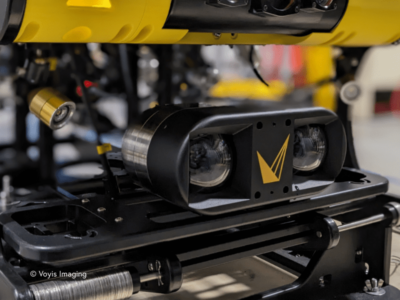
A £1.8m High-Performance Imaging Radar (HPIR) project aims to develop a high-performance imaging radar product specifically designed for AVs. By addressing a gap in the CAM Supply Chain UK, APTcore, Garfield Microelectronics, Plextek and Cambridge Sensoriis will enable more robust, cost-effective systems that can operate in a wider range of weather conditions while reducing reliance on lidar.
The £1.4m Photonic Inertial Sensors for Automotive (PISA) project with Zero Point Motion and WAE Technologies aims to develop advanced position and navigation sensors that work reliably in various environments. This will use Micro Electromechanical Systems (MEMS), Photonic Integrated Circuits (PICs), and low-cost laser/detectors to improve the performance, resilience, and safety of autonomous vehicles (AVs) by reducing reliance on vulnerable external signals.
The £2m Sim4CAMSens aims to enable accurate representation of ADS sensors in simulation. It will develop a sensor evaluation framework that spans modeling, simulation, and physical testing. This project will involve the creation of new sensor models, improved noise models, new material models, and new test methods to allow ADS and sensor developers to accelerate their development.
The AIM-DBW project aims to deliver a universal and affordable drive-by-wire system that replaces traditional mechanical linkages with electronic ones. This system enables automation of the throttle, steering, braking, gears, and ancillary systems of a vehicle with AIM Technologies and TRL.
- Infineon to set up driverless car design centre with Foxconn
- Helm.ai expands into Germany, raises $55m for driverless car tech
The Autonomous Cargo project by Aurrigo and UPS is creating an autonomous 7.5t dolly for airside cargo movements. A simulation tool will be developed to quantify the benefits of CAM for air cargo operations, providing operators with insights into optimal CAM vehicle types or required infrastructure modifications.
The £1.5m CERTUS project is developing a toolset that helps to efficiently identify, define and execute the test requirements for an autonomous driving system. Horiba Mira, Polestar and IPG Automotive are looking at three key questions: what to test, how to test, and when to stop testing. The project partners will collaborate to develop and demonstrate effective testing methodologies.
DeepSafe aims to support the verification and validation (V&V) of automated driving systems (ADS) through the development and deployment of industry-critical data and a next-generation simulation toolchain.
By combining high acuity data recorded with a new high-speed test methodology operating in real world environments, and high-volume simulation mediated by world-leading raytraced simulation, the project will address the “reality gap” on the most critical scenarios to train ADS against high-impact collisions, emergencies, and the whole landscape of edge cases. Adding a novel AI-based software for backtracking failure modes to their source, the project hopes to finally unblock the way to safe and economical AV deployments with Drisk.ai, Imperial College and Claytex Services in the £2m project.
DriveSafeAI will develop a safety assurance framework for the safe deployment of AI in self-driving technology across all driving domains. Bringing together Wayve’s next-generation end-to-end AI approach to self-driving, with WMG’s expertise on the safety of automated systems, DriveSafeAI will deliver a set of safety methods, tools and datasets that will support the whole self-driving industry.
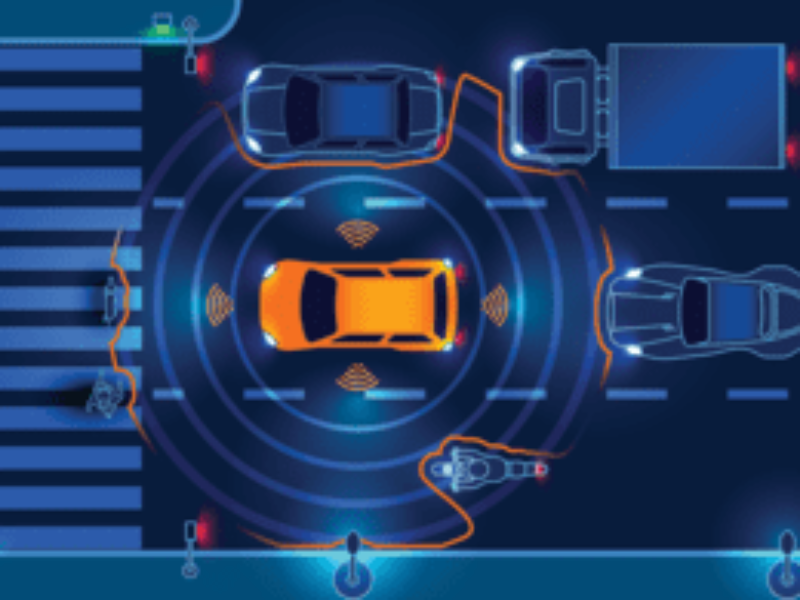
Driven By Sound is a £1m collaborative initiative led by Calyo with Baro Vehicles to create an affordable, robust navigation system for automated vehicles, with a particular emphasis on adverse weather handling. This system features a high-performance computer supporting all levels of automated and autonomous driving. It incorporates cutting-edge 3-D ultrasound sensors for safety and redundancy, ruggedisation for durability, and robust cybersecurity measures.
 If you enjoyed this article, you will like the following ones: don't miss them by subscribing to :